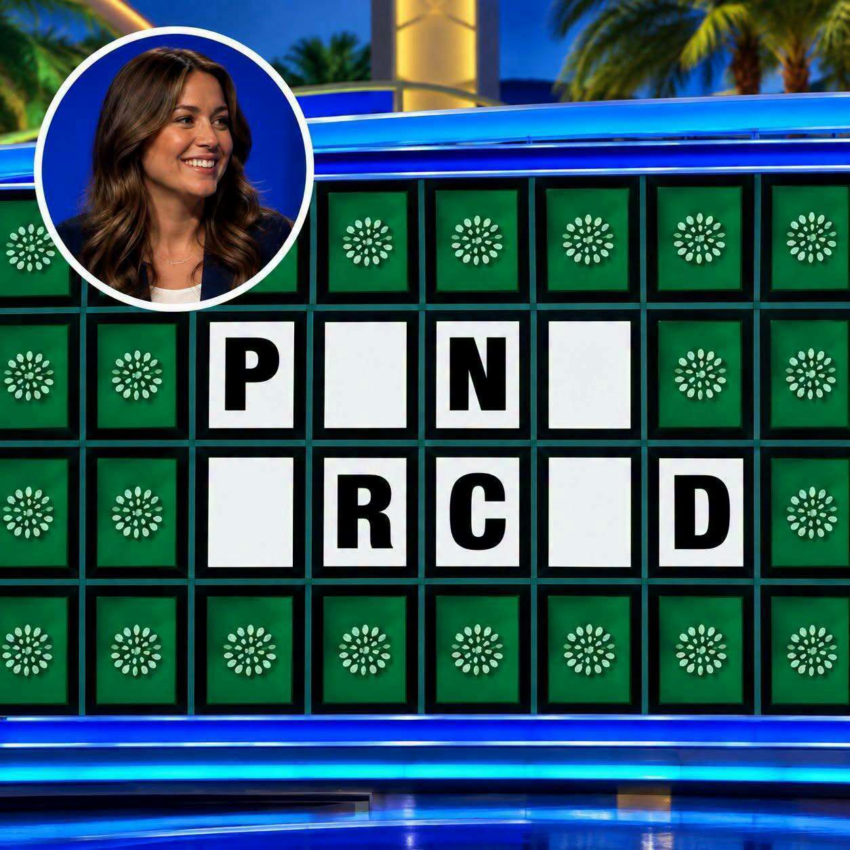
Dinner dishes are drying in the rack, the kettle is whistling on the stove, and the familiar chimes of America’s favorite puzzle board fill the family living room. For decades, gathering around the television at 7:00 PM with a warm mug of spiced chamomile tea has been a comforting weekday ritual. We shout answers from the sofa, cheer when someone lands on a prize wedge, and occasionally cringe when someone buys an unnecessary vowel. Yet every once in a while, a moment unfolds on screen that brings everyone straight to the edge of their seats—not out of joy, but disbelief. That exact tension erupted when contestant Megan tackled a seemingly solvable bonus round, giving birth to the Wheel of Fortune Megan pink orchid ruling that viewers cannot stop replaying.
The stakes were massive. A sleek envelope in Pat Sajak’s hands held forty thousand dollars in cash, and Megan stood just a few letters away from walking away a champion. When the timer began counting down, she spoke. She smiled. She seemed to cross the finish line. Then came the harsh buzz that drained the color from the studio, setting off an online firestorm that raises fascinating questions about pressure, acoustics, and the uncompromising rulebooks of classic television.
The Bonus Round Setup: Facing Down “Pink Orchid”
Every seasoned game show watcher understands the nerve-wracking rhythm of the final round. You get the standard letters—R, S, T, L, N, and E—and then you pick three consonants and one vowel of your own. Megan stepped up to the board facing the category “Living Thing.” Her additional letter selections revealed just enough white squares to form a clear picture for an observant eye: a four-letter word stacked above a six-letter word.
On the top line sat the letters P and N with two empty spaces. Directly beneath them, the board displayed an R, a C, and a D. To anyone who spends their weekends tending houseplants or browsing local garden nurseries, the botany-inspired phrase leaped off the wood paneling immediately: PINK ORCHID.
With ten seconds on the ticking clock, solving it felt well within grasp. Megan took a breath, looked intently at the display, and began calling out guesses. What happened next inside that ten-second window became the center of a debate that spread across morning breakfast tables, Facebook community boards, and Reddit threads nationwide.
A Syllable in the Shadows: What Really Happened on Stage
As the clock started its relentless countdown, Megan threw out an initial phrase. Many viewers at home—listening through high-definition soundbars or living room speakers—swore they clearly heard her mutter “pink orchid” under her breath right at the start. Moments later, struggling to find traction, she said, “Something orchid… tree orchid… oval orchid…” before the timer ran out.
When the buzzer signaled defeat, Pat Sajak gently opened the card, confirming the phrase was indeed “Pink Orchid,” and revealed the lost $40,000 bonus check. Megan handled the defeat with total grace, smiling warmly despite the gut punch. But across living rooms from coast to coast, family members turned to one another with the same startled question: Didn’t she say that first?
“You could see the realization flash across her face, yet the official buzzer left no room for appeal. It was one of the most agonizing moments in recent television history.”
Clips migrated to social media within minutes. Avid viewers pulled out noise-canceling headphones, cranked their audio sliders to maximum volume, and isolated the waveform of her first utterance. To one camp of listeners, she distinctly said, “Living thing… pink orchid.” To another camp, her lips formed the words, “Something… orchid,” slurring the first syllable into a soft mumble that never produced a clear “P” sound. In the fast-moving environment of live stage production, the judges went with what they heard in real time.
Studio Pressure vs. Couch Comfort
It is always effortless to solve a puzzle while sitting curled under a knit throw blanket with your feet propped up on an ottoman. There are no blazing overhead studio lamps cooking your forehead. There is no audience of strangers holding their breath, and there is no life-changing sum of money dangling on the correct pronunciation of two short words.
Stage fright does strange things to the vocal cords. Contestants frequently suffer from dry throat, racing pulses, and shallow breathing. Under that kind of physiological strain, words get clipped. Consonants get swallowed. A contestant might think their brain sent the command to speak “pink,” while their tongue only managed an airy, unvoiced whisper. In our own cozy kitchens, a misspoken phrase just gets a laugh and a quick correction. On a soundstage in Culver City, an incomplete syllable costs forty grand.
Why Game Show Rulebooks Refuse to Bend
To understand why the judges did not step in to award Megan the prize, you have to look at the strict legal framework governing broadcast competitions. Ever since the quiz show scandals of the late 1950s, federal broadcasting regulations have required networks to follow rigid, unbending standards. Third-party compliance officers monitor every single spin and syllable to ensure absolute impartiality.
- The Complete Phrase Mandate: Contestants must utter the exact solution continuously and clearly without altering words or adding filler syllables.
- Acoustic Certainty: Judges cannot grant a win based on what they assume a player intended to say; the response must be audibly distinct to the control booth on the spot.
- The Danger of Subjectivity: If producers start giving “benefit of the doubt” calls to charming contestants, the door opens to accusations of favoritism and unfair play.
Consistency is the backbone of any game. As painful as it was to watch Megan miss out, easing the rules creates an impossible slippery slope. If a half-whispered “pink” counts today, does an incomplete vowel count tomorrow? Standards protect the integrity of the prize vault, even when the human result feels cold and unsympathetic.
Other Infamous Wheel of Fortune Stumbles
Megan is far from the only contestant to feel the sting of an unforgiving puzzle board. Over forty-plus years of syndication, the show has witnessed some truly heart-wrenching technicalities that left audiences shouting at their screens:
- The “And” Addition: Countless players have solved a crossword-style clue perfectly, only to toss an unauthorized “and” between the words, triggering an immediate buzzer.
- Pronunciation Traps: Classic missteps—like pronouncing the mythical Achilles as “A-chill-us” or reading “flamenco dancer” as “flamingo dancer”—instantly voided otherwise solved puzzles.
- The Split-Second Cutoff: Starting a correct word just a millisecond after the final chime echoes through the studio regularly locks players out of luxury vacations and new vehicles.
These strict rulings are precisely what make the game so compelling to watch. The line between celebration and disappointment is razor-thin, turning an ordinary half-hour evening broadcast into high-stakes drama.
The Real Takeaway for Casual Puzzle Lovers
While the online debate over Megan’s solution will linger in rerun syndication for years to come, her sportsmanship remains the highlight of the episode. She did not throw up her hands, argue with the host, or let disappointment cloud her demeanor. She smiled, accepted the final ruling, and celebrated the cash she had already accumulated during the main game rounds.
There is a sweet lesson there for our own quiet routines. Whether we are tackling morning crosswords over a cup of French roast coffee, playing board games around the kitchen table with our kids, or yelling answers at the evening screen, the joy lies in the attempt. We play because words are fun, puzzles challenge our wits, and shared evening traditions ground our busy lives.
The Wheel of Fortune Megan pink orchid ruling reminds us that even when things do not go our way on a minor technicality, handling the outcome with warmth and poise is the truest victory of all.