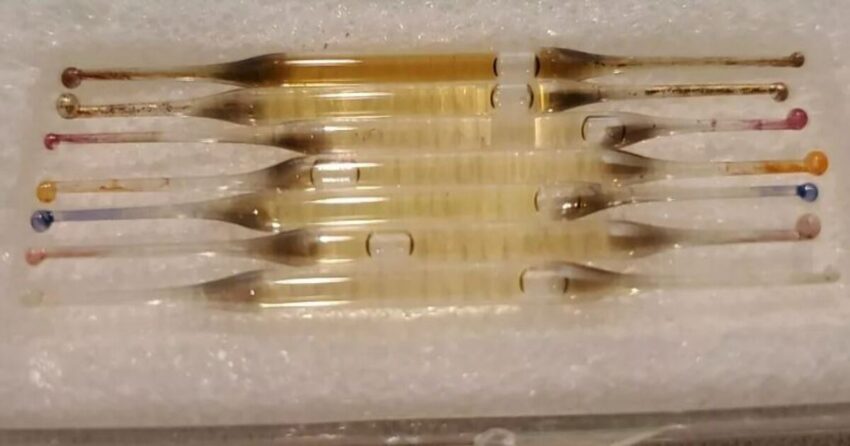
Open an old leather handbag at an estate sale, and you can almost hear the soft click of brass hardware. If you are lucky, tucked right behind the coin purse or nestled in the satin lining, you might discover a slender glass vial no thicker than a matchstick. It has tiny, pointed ends, often tipped with droplets of colored wax or bright lacquer.
That little glass relic is not a medical sample or a lost sewing pin. It is one of the most delightful mid-century beauty innovations ever made: an authentic vial of vintage perfume nips.
Long before plastic travel atomizers existed, these miniature ampules allowed women to carry genuine French perfume everywhere. They captured a quick splash of luxury that fit neatly between a house key and a lipstick tube, offering an immediate sensory reset during long days.
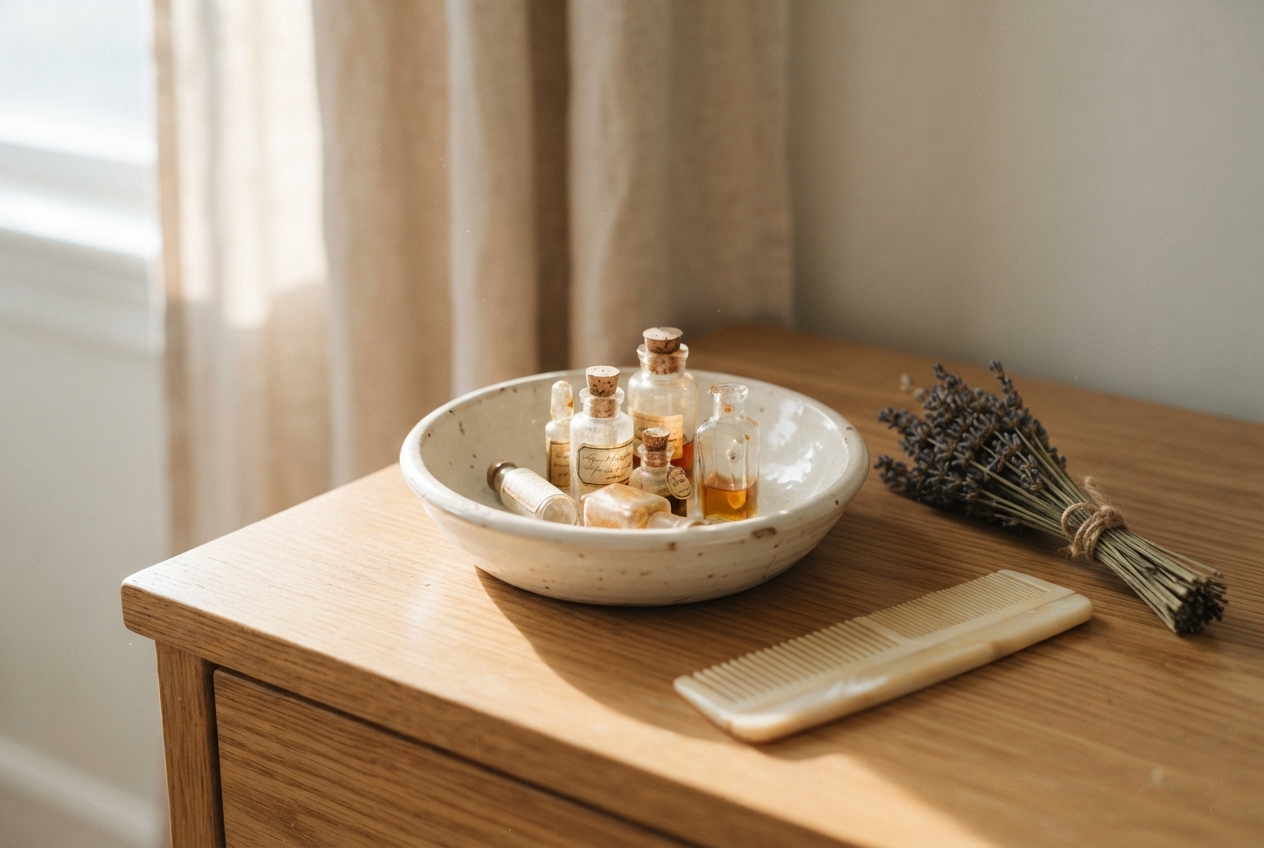
Fragile glass ampules were designed to hold just enough fragrance for an afternoon refresh without cluttering a dresser.
What Were Vintage Perfume Nips, Exactly?
In the late 1930s through the 1970s, beauty brands wrestled with a practical challenge. Splash bottles of luxury perfume were heavy, expensive, and notoriously prone to leaking inside handbags. Atomizers were bulky contraptions that often clogged or evaporated within weeks.
Enter companies like Nips, Inc. and packaging houses like Wadsworth. They developed hermetically sealed miniature tubes filled with a single application of authentic, undiluted perfume extract. Each tube measured barely two inches long and held just a fraction of a milliliter.
Because the fragrance remained airtight until the moment of use, the precious volatile top notes stayed intact. Heat, humidity, and purse friction could not spoil the scent inside. It was a remarkably clever solution for women who wanted high-end glamour without lugging around fragile full-sized crystal decanters.
“A tiny drop of French fragrance, sealed in glass until the very second you stepped out into the evening.”
The Mechanics of the Snap: How Capillary Action Changed Fragrance on the Go
A persistent rumor on vintage forums suggests you needed a match or lighter to melt these tubes open. That is entirely false, not to mention a serious fire hazard with alcohol-based fragrances. The true method was purely mechanical and surprisingly satisfying.
Most tubes were manufactured from ultra-thin blown glass or a proprietary pliable plastic known as “plastene.” Each end featured a narrow, tapered point marked with a dab of colored enamel. To release the liquid, you simply grasped both ends between your thumb and forefinger and snapped the tips off.
Why break both ends? Simple physics. Snapping just one tip kept the liquid trapped by vacuum pressure and surface tension. Breaking the opposite end broke the vacuum, allowing the perfume to flow freely through capillary action.
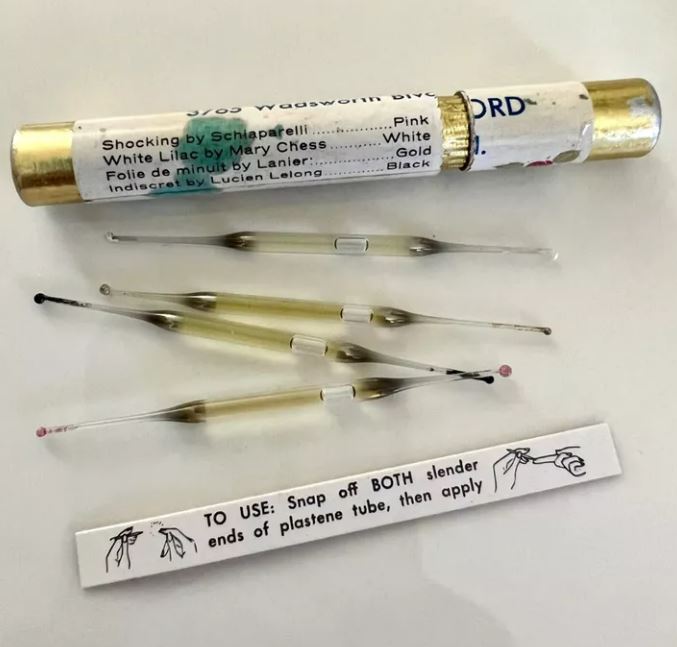
A vintage Wadsworth tube sampler displaying intact plastene tubes and step-by-step instructions for snapping both tips to release the scent.
You then brushed the slender applicator end directly against your pulse points. Wrists, the hollow of the throat, behind the earlobes, and across the collarbones received an exact, measured dose. When finished, you tossed the spent tube away, leaving zero sticky residue in your bag.
High Fashion in Pocket Sizing: The Designer Houses Behind the Glass
Do not confuse these vintage pieces with cheap dime-store imitations. The genius of the nip format lay in its high-fashion partnerships. Nips, Inc. secured licensing agreements with premier Parisian and American fragrance creators.
A single travel case might contain Elsa Schiaparelli’s bold and spicy Shocking, Lucien Lelong’s warm floral Indiscret, and Mary Chess’s lush White Lilac. Other sets featured celebrated scents from Lanvin, Caron, and Bourjois.
These sampler boxes served as approachable invitations into high-end beauty. A working woman could purchase a boxed set of twenty designer nips at a department store counter for a modest price. She could experience the scent profiles of the world’s most luxurious perfume houses without committing to an unaffordable crystal bottle.
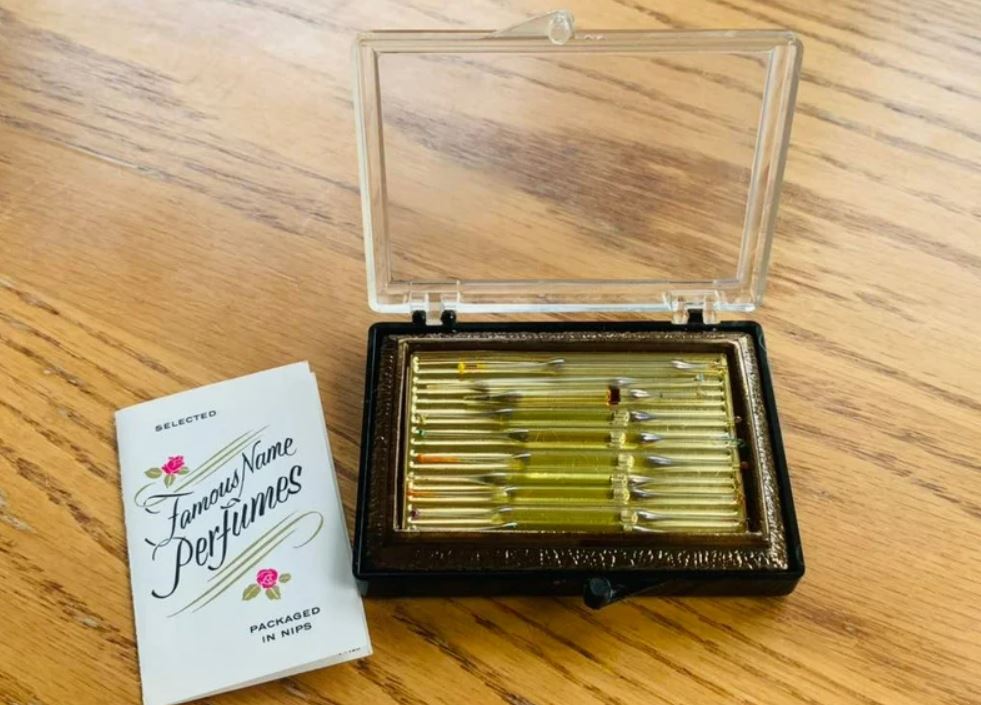
A black-and-gold hard plastic case containing a complete set of “Famous Name Perfumes Packaged in Nips” alongside its original informational leaflet.
The colored tips served as an organized key. A white tip might indicate a crisp daytime floral, while a black or deep gold tip marked an intoxicating evening amber. Deciding which scent to snap felt like choosing a personal soundtrack for the day.
The Mid-Century Handbag: Practical Luxury on the Move
To understand why these tubes were so popular, look closely at how daily routines shifted after World War II. Women moved into offices, ran bustling households, attended civic clubs, and commuted by bus and train. Mobility became central to personal style.
A woman’s handbag was an organized personal toolkit. Inside, you found a heavy brass powder compact, a mechanical pencil, peppermint drops, leather driving gloves, and a fresh linen handkerchief. Bulky splash bottles simply had no place in that curated space.
Perfume nips offered instant refreshment between errands. After an afternoon subway ride or before heading to dinner and a show, a quick snap of a tube restored a sense of calm elegance. It was beauty reduced to its most functional, tactile elements.
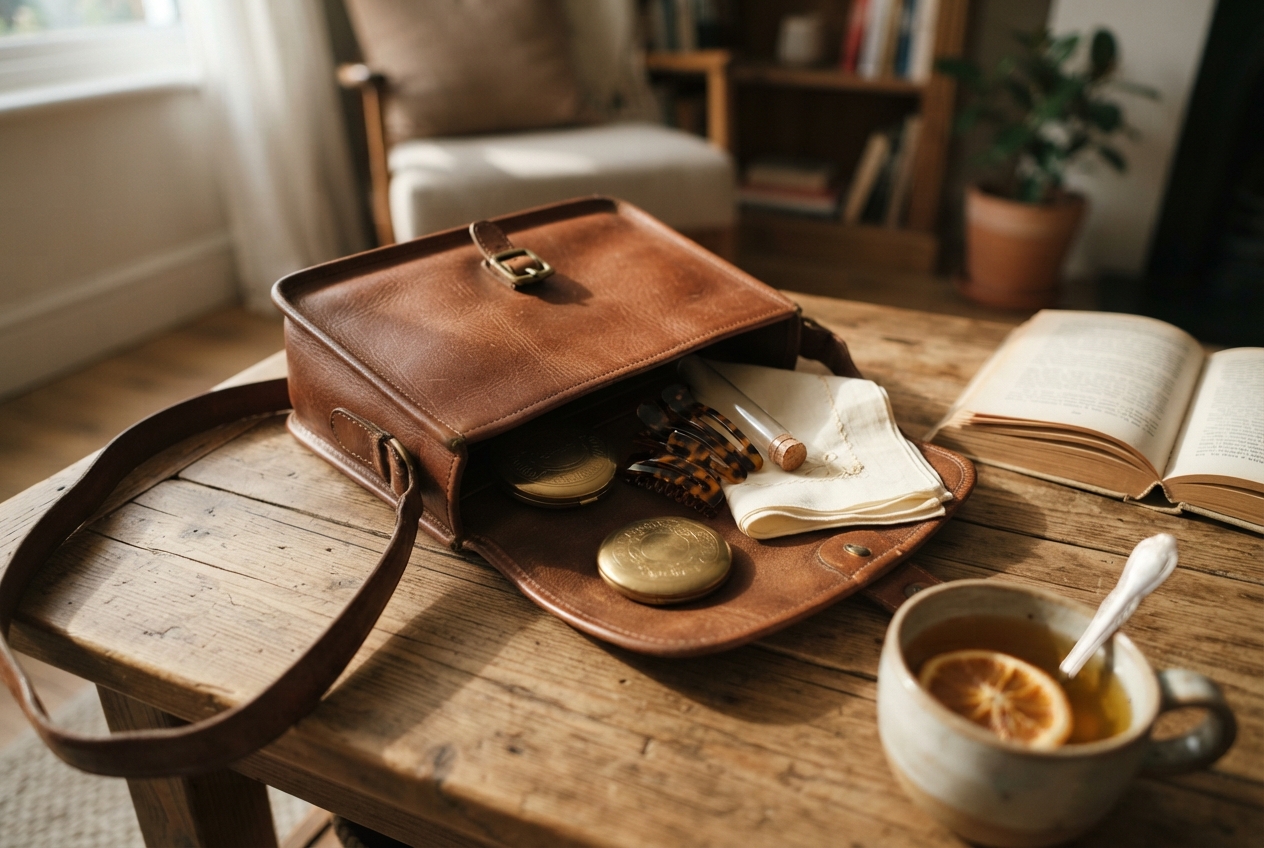
Mid-century handbags were masterclasses in organization, carrying compact beauty tools built for life on the move.
Hunting for Vintage Fragrance Sets at Estate Sales and Flea Markets
If you love scouring flea markets and estate sales, keep an eye out for small, velvet-lined plastic boxes or metal cases tucked into dresser drawers. These sets frequently hide among sewing notions, old cufflinks, and antique jewelry.
When assessing a potential find, pay close attention to the state of the liquid. Over six or seven decades, carrier fluids can slowly seep through micro-fissures in glass or plastene. Look for tubes that still hold clear, golden-amber liquid rather than thick, blackened residue.
Check the seals at each tip. Intact enamel coating indicates an uncracked tube that has avoided catastrophic evaporation. Original paper guides or branded labels add substantial historical value and confirm which perfumes sit inside each slot.
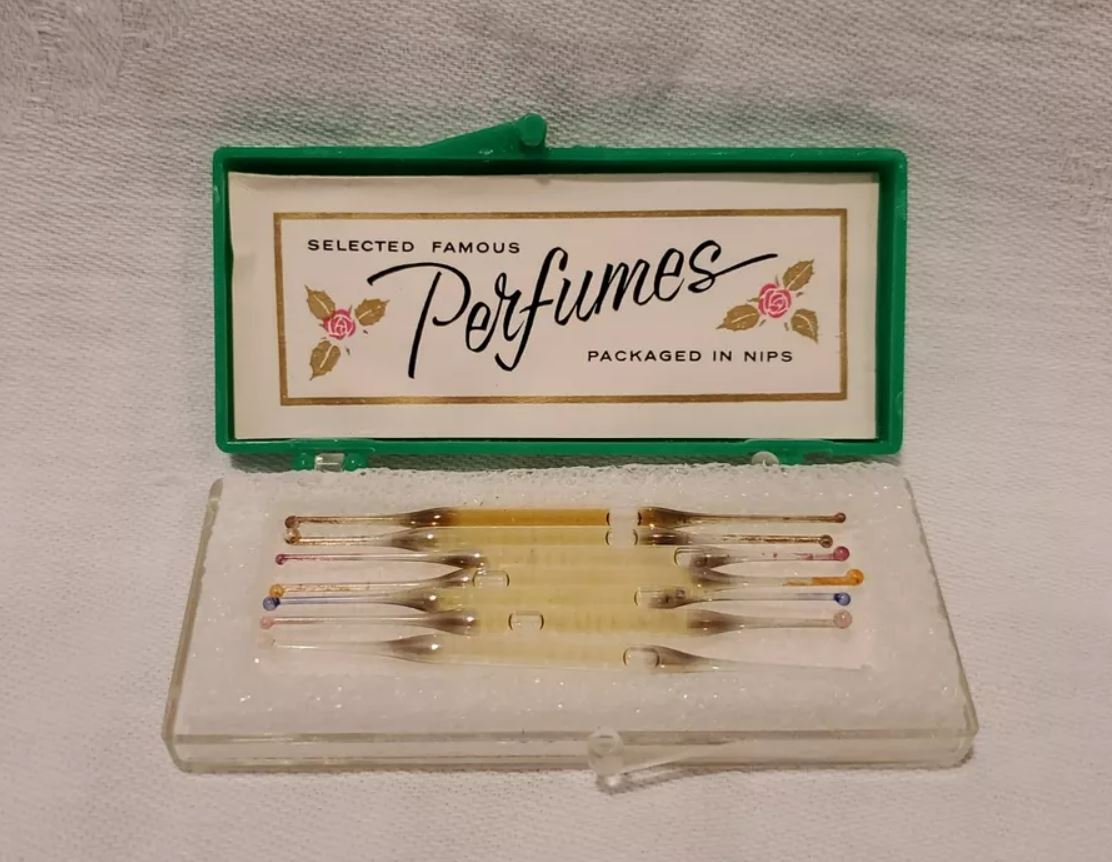
A vintage green plastic travel case with an intact foam insert holding miniature perfume nips, found preserved in estate-sale condition.
A quick safety note for modern collectors: resist the urge to break open and wear original vintage contents. Fragrance chemistry changes across decades. Natural oils oxidize, resins thicken, and older synthetic components can trigger unexpected skin reactions. Cherish them as historical artifacts, not daily cosmetics.
Preserving and Displaying Fragrance History in the Modern Home
These dainty glass treasures deserve better than staying forgotten in a dark drawer. With a thoughtful approach, they make stunning decorative accents on a vanity, open bathroom shelf, or nightstand.
Direct sunlight is the greatest enemy of vintage glass and aged perfume oils. Ultraviolet light accelerates discoloration and weakens fragile mid-century plastics. Choose an interior spot illuminated by soft, ambient room light rather than a sunny windowsill.
A miniature glass cloche set over an antique marble coaster provides a secure display. It shields fragile tubes from accidental bumps and dust while turning them into charming conversational accents. You can also mount a complete, intact card set inside a shallow brass shadowbox to hang near your dressing mirror.
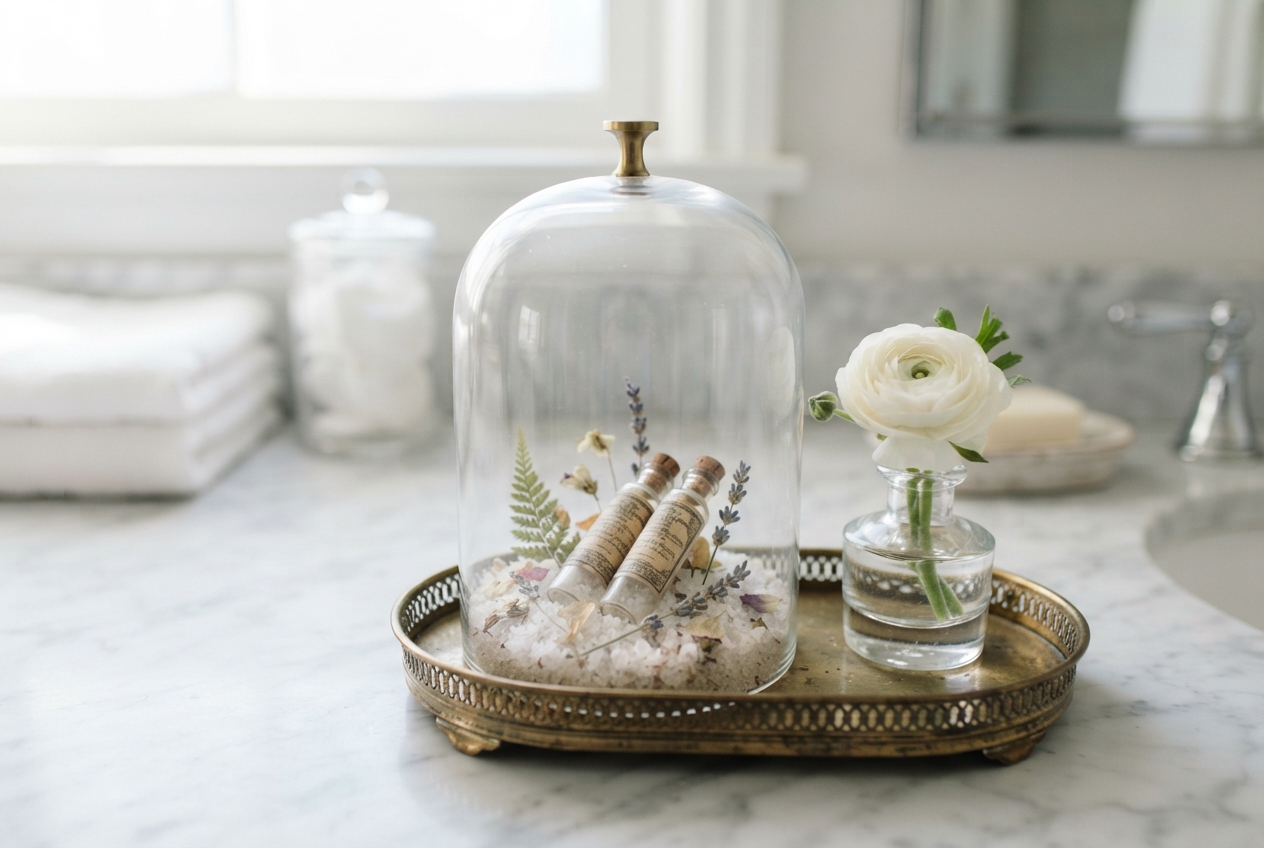
Enclosing fragile vintage ampules under a small glass cloche keeps dust away while turning rare vanity pieces into functional home art.
Bringing the Slow Fragrance Ritual into Modern Living
While single-use disposable glass has fallen out of step with sustainable modern living, the intention behind it remains deeply appealing. Modern life often rushes past the small pleasures that mid-century routines celebrated.
You can recreate this intentional moment using modern, sustainable goods. Keep a small roll-on bottle of botanical fragrance oil or a carved brass box of beeswax-based solid perfume in your purse pocket. When four o’clock fatigue sets in, step away from screens for sixty seconds.
Warm the oil between your fingers and breathe in the natural notes of sandalwood, sweet neroli, or fresh bergamot. It costs almost nothing in time, yet it grounds your thoughts and restores a calm presence to the rest of your day.
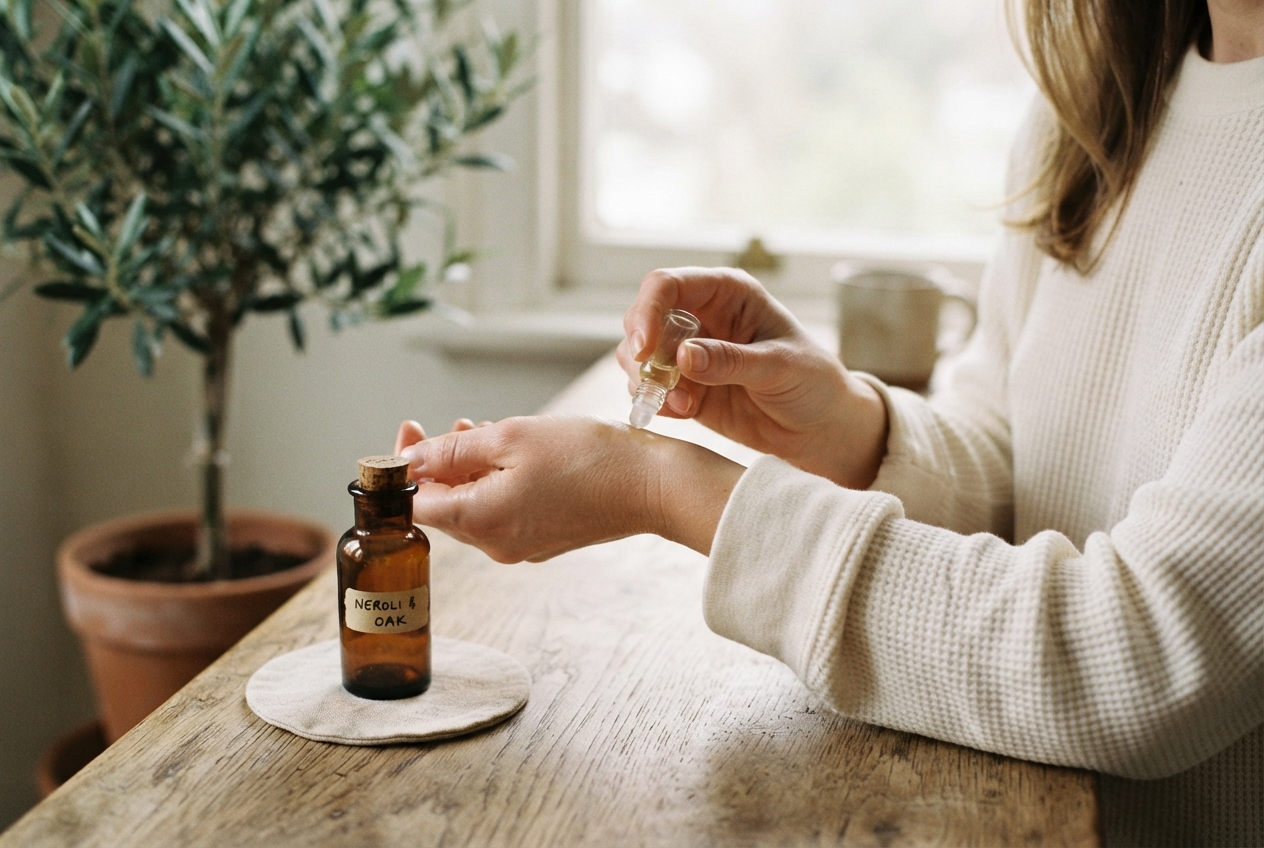
Taking a conscious minute to apply a concentrated drop of botanical perfume grounds your routine and resets the afternoon.
Discovering a forgotten set of vintage perfume nips reminds us that elegance does not require oversized bottles or complicated routines. It lives in the small, tactile moments we carve out for ourselves, one thoughtful drop at a time.