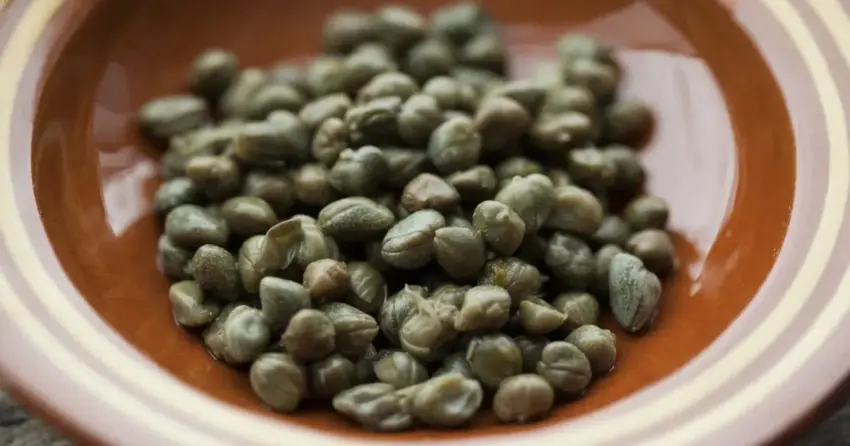
You take a forkful of chicken or a twirl of warm pasta, and suddenly your palate lights up. A sharp, savory pop cuts straight through the butter, leaving behind an earthy tang that feels both bright and deeply satisfying. That little burst is a caper, and once you understand what it brings to a recipe, you will find yourself reaching for the jar several times a week.
Most home cooks let that slender glass jar sit tucked away on the top refrigerator shelf, right behind the Dijon mustard and pickled jalapeños. That changes today. Learning how to use capers turns basic weeknight dinners into memorable meals with almost no extra prep time.
What Are Capers, Really?
Despite their firm bite and salty demeanor, capers are not berries, seeds, or miniature olives. They are the tightly closed, immature flower buds of Capparis spinosa, a wild, sprawling shrub with rounded leaves and sharp thorns. This stubborn bush thrives along sunny limestone cliffs and coastal rock walls across Italy, Greece, Spain, and Morocco.
If left unpicked, these tight green pearls open into delicate, pale pink and white blossoms with long, spidery violet stamens. But once the flower blooms, the culinary magic of the bud is lost. Harvesters pick these buds by hand in the heat of early summer, selecting only the firmest, smallest buds before the sun forces them open.
Straight off the bush, a raw caper bud tastes sharply bitter and unpalatable. It requires an ancient preservation technique—curing in coarse Mediterranean sea salt or steeping in an acidic vinegar brine—to draw out the glucocapparin compounds and develop that signature savory, floral punch.
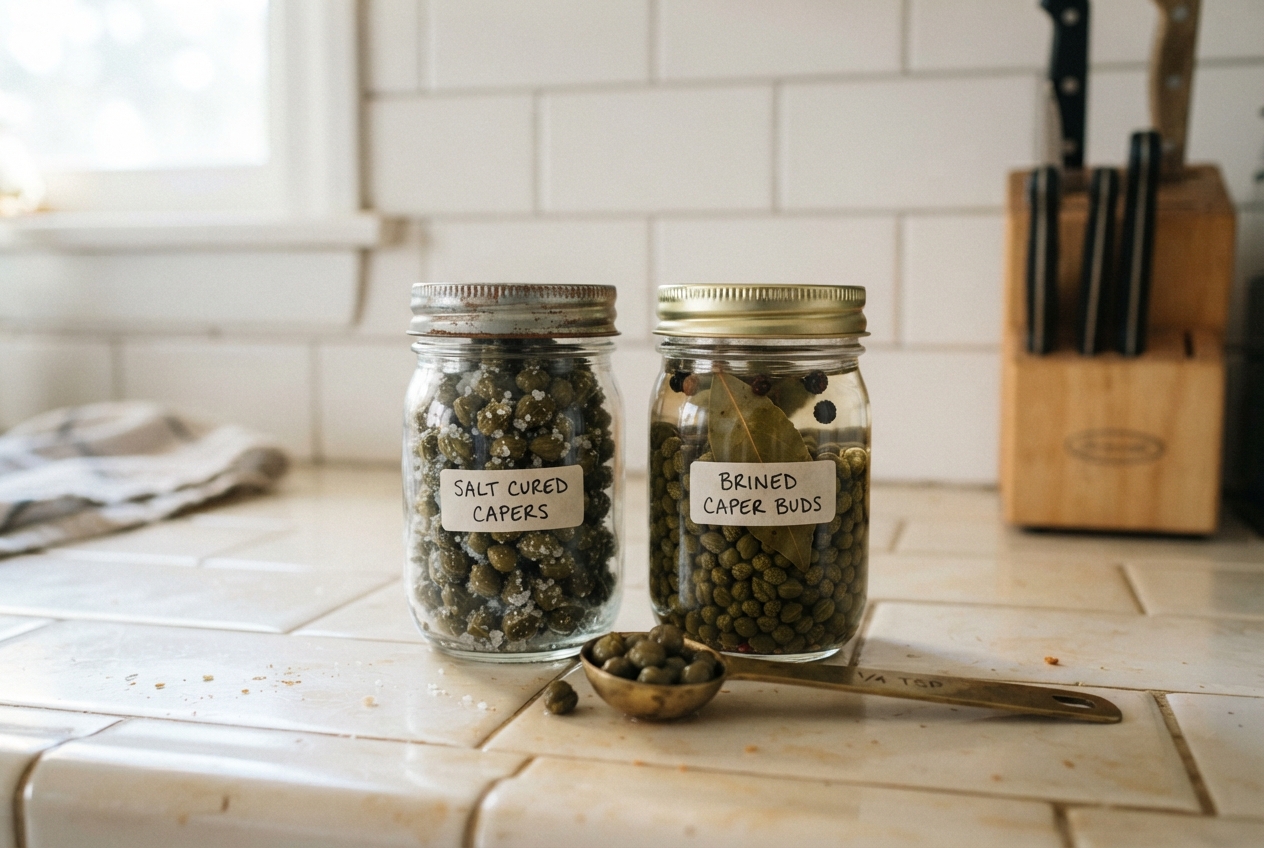
Salt-cured capers offer pure floral pungency, while brined buds deliver an instant hit of sharp vinegar tang.
Salt-Packed vs. Brined: Which Jar Should You Buy?
Walk down the condiment aisle, and you will generally encounter two distinct styles of capers. Knowing the difference between them dictates how you prep them before cooking.
- Vinegar-Brined Capers: These are the most common jars in standard supermarkets. Submerged in a solution of vinegar, water, and salt, they pack a bright, puckery acidity. They are ready to use straight from the jar, making them convenient for quick dressings and sauces.
- Salt-Packed Capers: Favored throughout southern Italy, these buds come buried in dry, coarse sea salt without any liquid. They retain a firmer, meatier bite and a pure, floral caper flavor unmasked by vinegar. They require a gentle fifteen-minute soak in cool water before using to leach out excess surface sodium.
Size also matters when you scan the label. Tiny non-pareils (under 7 millimeters) are prized for their delicate texture and melt-in-your-mouth feel. Larger grades, like surfines or capucines, carry a bolder, mustardy punch that holds up well in slow-simmered tomato stews and hearty braises.
How to Use Capers in Everyday Cooking
The beauty of cooking with capers lies in their balance. Rich meats, creamy cheeses, and heavy oils all crave acid and salt to keep every bite feeling clean. Capers provide both in a single, tidy package.
Mastering the Pan Sauce: Balance Without Alcohol
Restaurant chicken cutlets often owe their savory gloss to a caper-flecked pan sauce. You do not need white wine or alcohol to build deep pan flavors at home. A splash of rich, homemade chicken stock mixed with fresh lemon juice works wonders when deglazing a hot skillet.
After searing your protein, pour in the stock and citrus juice, scraping up the browned fond from the pan bottom. Whisk in a tablespoon of cold unsalted butter and toss in a generous spoonful of capers right at the finish. Adding them in the final sixty seconds warms them through while keeping their bright acidity intact.

A golden seared chicken cutlet topped with a glossy, lemon-butter pan sauce and studded with salty capers over tender penne.
The Secret Technique: Flash-Fried Crispy Capers
If you have only eaten capers soft from the jar, this technique will transform your cooking routine. Frying them in a shallow pool of hot olive oil turns them into crispy, blossoming flavor crunchers.
Drain a few tablespoons of brined capers and blot them thoroughly dry on a clean kitchen towel. Heat two tablespoons of olive oil in a small skillet over medium-high heat until shimmering. Drop the dry capers into the hot oil. Within ninety seconds, the petals will bloom open like tiny flowers, turning golden and brittle.
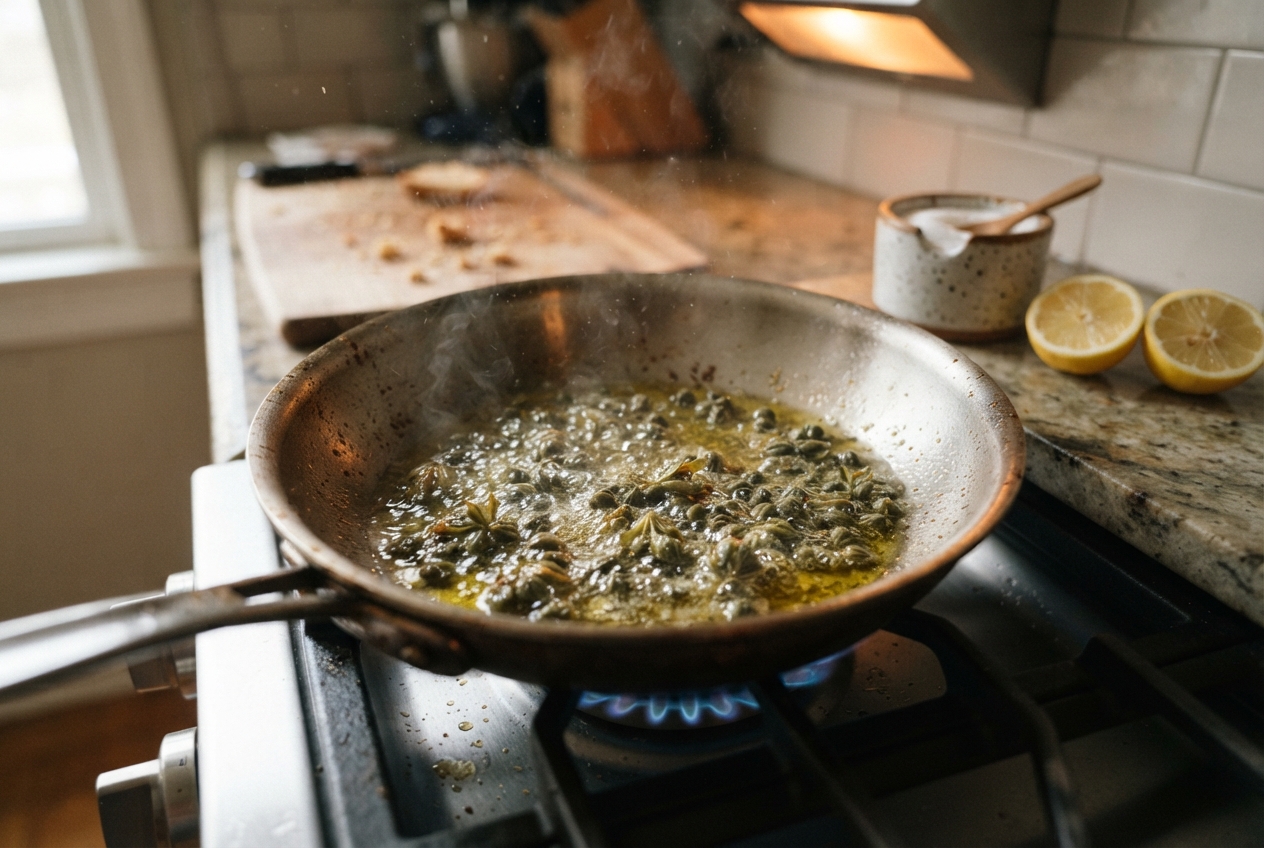
Frying capers in olive oil for just ninety seconds turns them into crisp, salty nuggets that burst with savory crunch.
Scoop them out with a slotted spoon onto paper towels. Scatter these crispy gems over roasted cauliflower, baked sweet potatoes, creamy potato leek soup, or soft scrambled eggs for a textural contrast that feels fancy with minimal effort.
Twirled with Pasta, Garlic, and Herbs
When the pantry looks bare, a satisfying dinner is still ten minutes away. While your spaghetti boils, gently warm sliced garlic, crushed red pepper flakes, and two tablespoons of capers in plenty of good olive oil over low heat.
Toss the al dente pasta straight into the warm skillet with a splash of starchy pasta water, chopped flat-leaf parsley, and a generous grating of lemon zest. The salty buds mingle with the fragrant oil, creating a light coating that clings to every noodle.
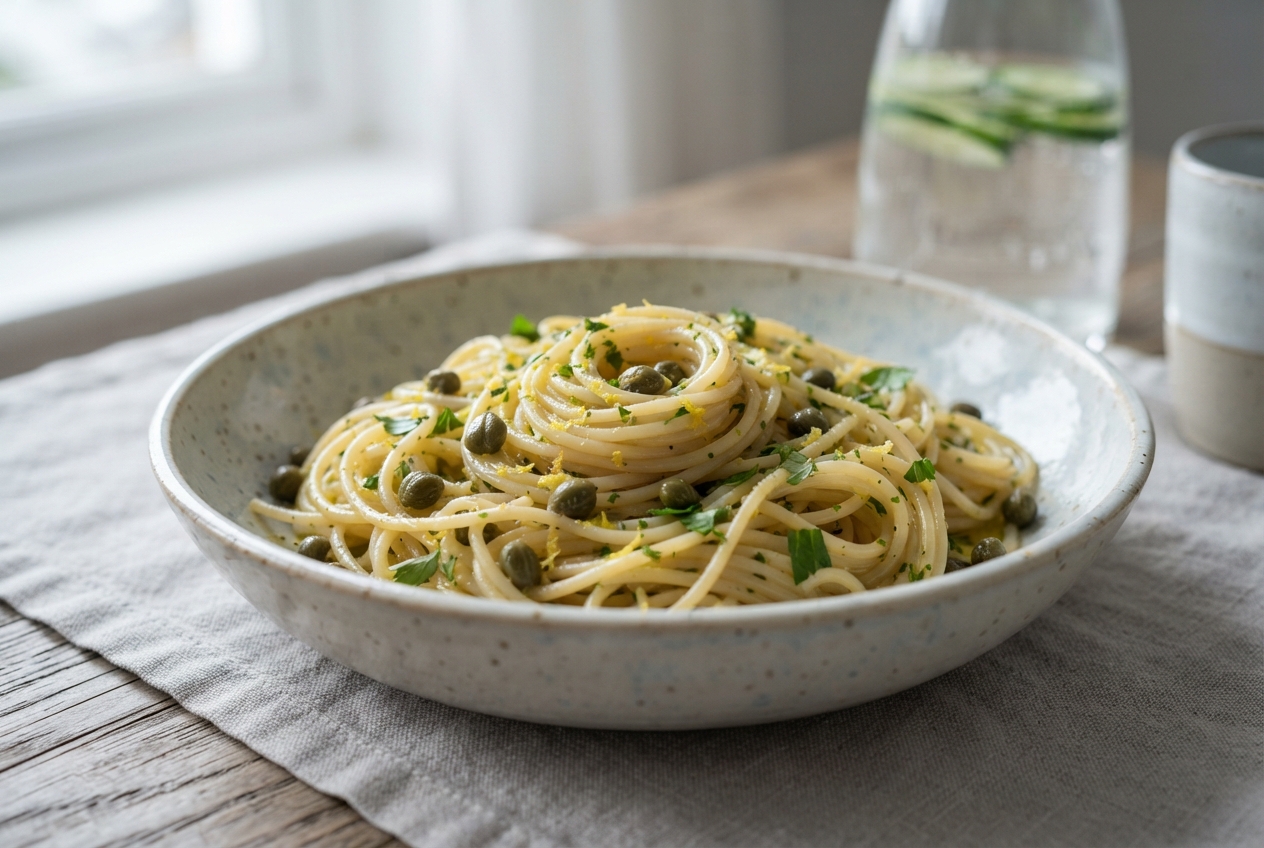
A quick toss of warm pasta with fresh lemon juice, herbs, and whole capers creates an instant, bright dinner without a heavy cream sauce.
The Weekday Pantry Lift: Sandwiches and Cold Salads
Capers make cold lunches distinctly better. If you find chicken salad, egg salad, or tuna salad tasting flat, skip the extra salt shaker and stir in chopped capers instead.
Their briny snap cuts right through heavy mayonnaise and flaky canned fish. Press them into an open-faced sandwich or fold them into a warm Mediterranean potato salad dressed with olive oil, grainy mustard, and sliced scallions.
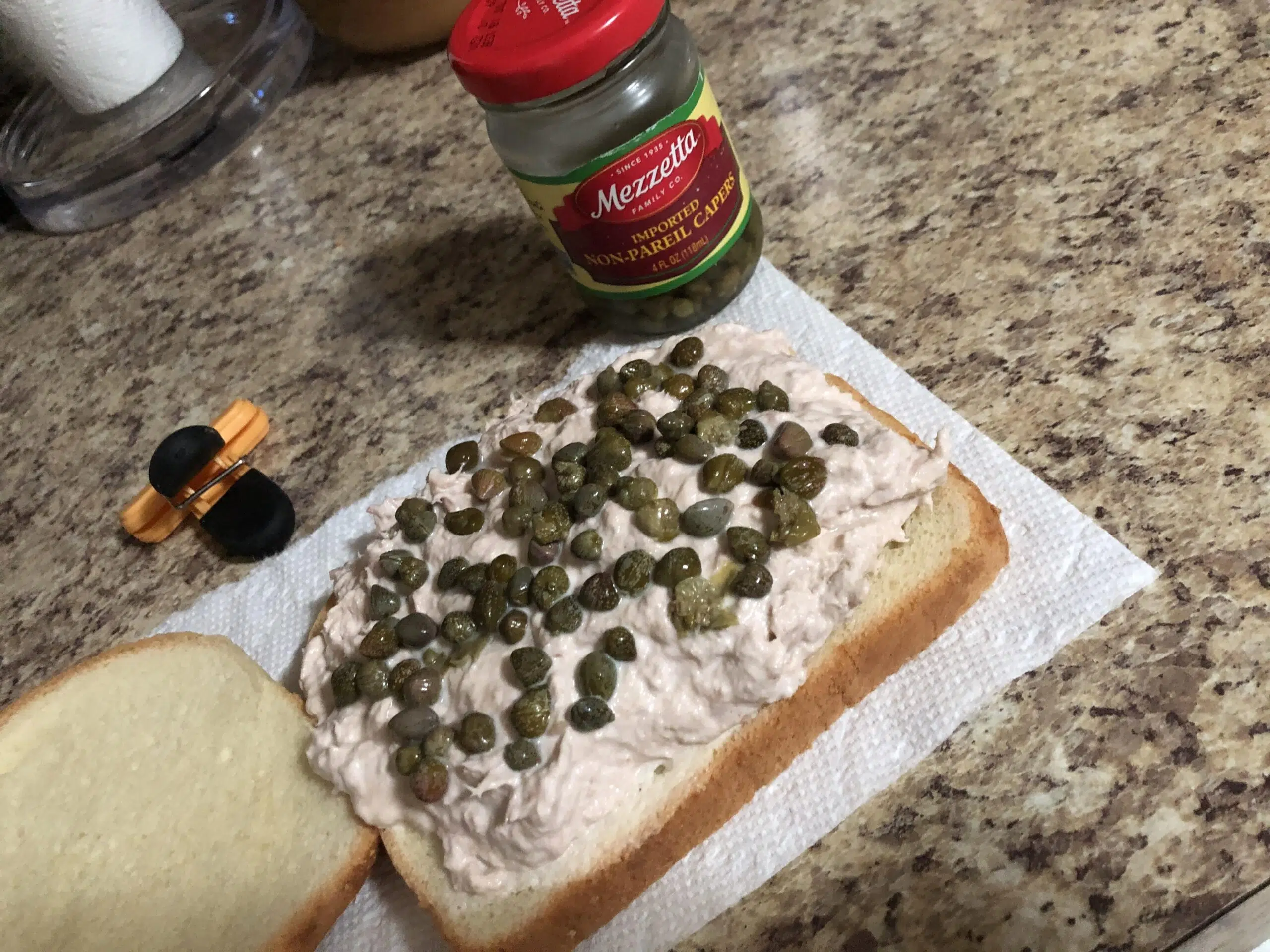
Tangy non-pareil capers scattered across a creamy tuna spread to add crunch and cut through rich mayonnaise.
Capers vs. Caperberries: Anatomy and Flavor Differences
People often mix up capers and caperberries, but they represent two different life stages of the very same plant. A caper is the unopened flower bud picked young. A caperberry is the fruit that forms after the flower has bloomed and dropped its petals.
Caperberries are noticeably larger—often the size of a green grape or Spanish olive—and are harvested with their long, slender stems still attached. Inside, their pale green pulp is filled with tiny, soft, edible seeds that give them a delicate crunch when bitten.
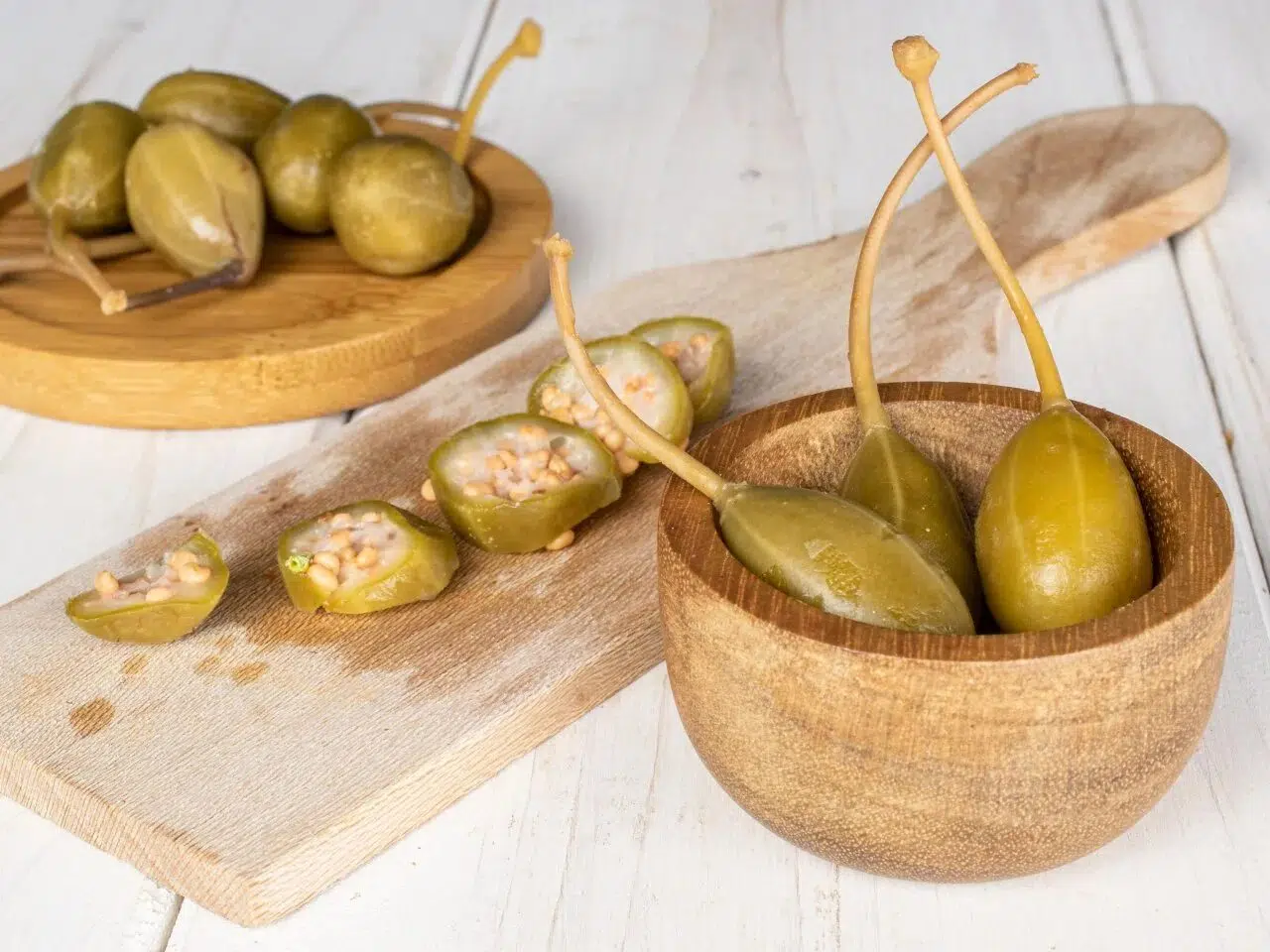
Slicing into a caperberry reveals its delicate interior seeds and softer, milder pulp compared to a tight, dense caper bud.
Because caperberries carry a milder, less concentrated brine than little capers, cooks rarely cook them down into pan sauces. Instead, they shine as finger food.
Serving Caperberries on Grazing Boards
Caperberries make a handsome companion on an afternoon grazing board. Set them in a small dish alongside sharp aged cheddar, mild goat cheese, rosemary flatbreads, and sweet dried figs.
Their gentle acidity cleanses the palate between rich bites of cheese. You can also skewer a whole stemmed caperberry with a cucumber ribbon and a splash of non-alcoholic sparkling tonic for a refreshing, botanical sip before dinner.
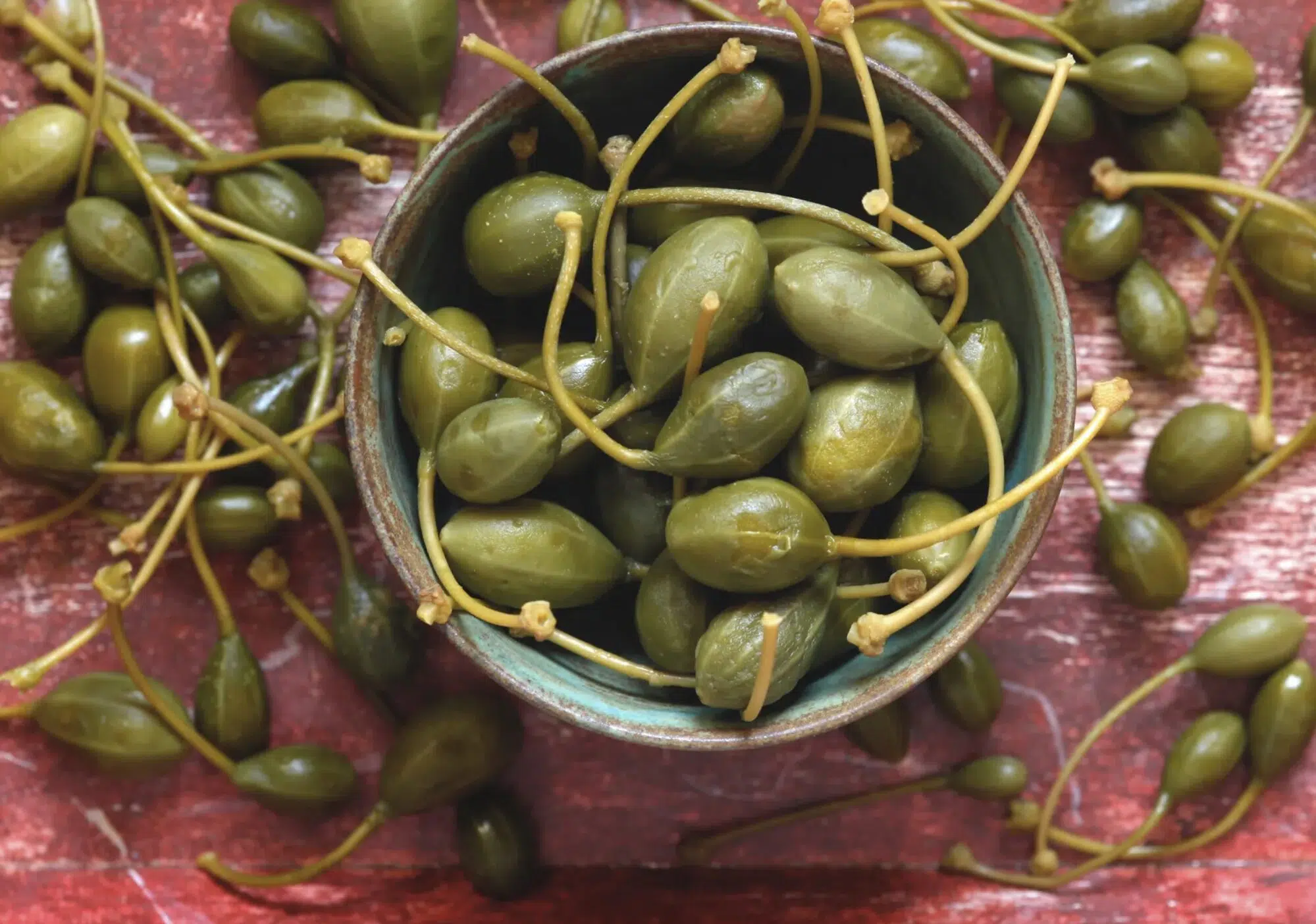
Stem-on caperberries resting in an earthy ceramic bowl make an effortless, briny addition to an afternoon snack spread.
Smart Substitutions When Your Jar Is Empty
Halfway through making dinner and realized you are out of capers? Do not scrap the recipe. You can recreate that distinct salty, acidic pop with a few reliable pantry workhorses:
- Green Peppercorns in Brine: These offer a remarkably similar soft texture and pickling tang, paired with a warm, peppery finish. Use them at a 1:1 ratio in pan sauces.
- Chopped Castelvetrano or Manzanilla Olives: Coarsely minced green olives mimic the savory brine and firm bite of capers. Add a drop of fresh lemon juice to match the missing acidity.
- Pickled Nasturtium Seeds: Often called the “poor man’s caper,” the green seed pods of garden nasturtium flowers can be pickled in vinegar and salt. They carry a peppery, horseradish-like kick that tastes remarkably close to wild capers.
- Finely Diced Dill Pickles: In a pinch for cold salads, finely diced sour pickles provide the salty crunch you need, though they lack the floral herbal notes of real capers.
Storage Tips and Zero-Waste Pantry Habits
Because capers spend their early lives curing in heavy salt or vinegar, they possess serious staying power in your home kitchen. Keep these simple preservation habits in mind:
Always use a clean fork or spoon when fishing capers out of the jar. Introducing oils, breadcrumbs, or stray food particles from butter knives can spoil the brine prematurely.
An open jar of brined capers will happily keep in your refrigerator door for up to a year, provided the buds stay completely submerged in their liquid. Salt-packed capers can be stored in an airtight container in a cool pantry or fridge for several years without losing their punch.
When the capers are gone, do not pour that cloudy, fragrant liquid down the sink. That leftover brine is gold. Whisk a tablespoon of caper brine into your next lemon-herb vinaigrette, use it to quick-pickle sliced red onions, or splash it into chilled tomato juice for an afternoon refresher.
Once you get comfortable with how to use capers, you will discover that this tiny pantry staple is one of the quickest ways to build deep, balanced flavors at home. Keep a jar cold, crisp up a spoonful in hot oil, and let your weeknight meals reap the savory benefits.