
You are standing by the sink washing breakfast dishes or glancing down at your shins after an afternoon working in the yard, and there they are. A web of vivid blue or greenish lines running along your hands, wrists, or calves looks noticeably bolder than you remember. It is completely natural to pause, run your thumb over the skin, and wonder what shifted.
For most of us, visible veins feel like an overnight surprise. One week your skin looks uniform, and the next, your circulation seems to be on full display. The good news is that seeing your veins is rarely a cause for panic. In fact, our blood vessels constantly respond to temperature shifts, movement, hydration, and the natural changes our bodies go through as birthdays add up.

Understanding why visible veins appear on your hands and legs helps you know when they are simply normal circulation at work.
Let’s walk through what makes those blue pathways stand out, how to tell healthy surface vessels from issues that need a physician’s eye, and practical habits you can use at home to keep your legs and hands feeling light and comfortable.
Everyday Triggers That Make Visible Veins Stand Out
Your veins are not static pipes buried deep inside your body. They are flexible, muscular channels lined with tiny valves that expand and contract based on what you are doing, what you are eating, and how warm the room happens to be.
When you step into a hot shower, bake in a warm kitchen, or spend an hour planting summer annuals, your blood vessels dilate. This process, known as vasodilation, is your body’s built-in cooling system. Your veins widen and push closer to the skin surface so excess heat can radiate out into the air. Once you cool down with a glass of chilled water or sit in an air-conditioned room, those bold blue lines often soften back down.
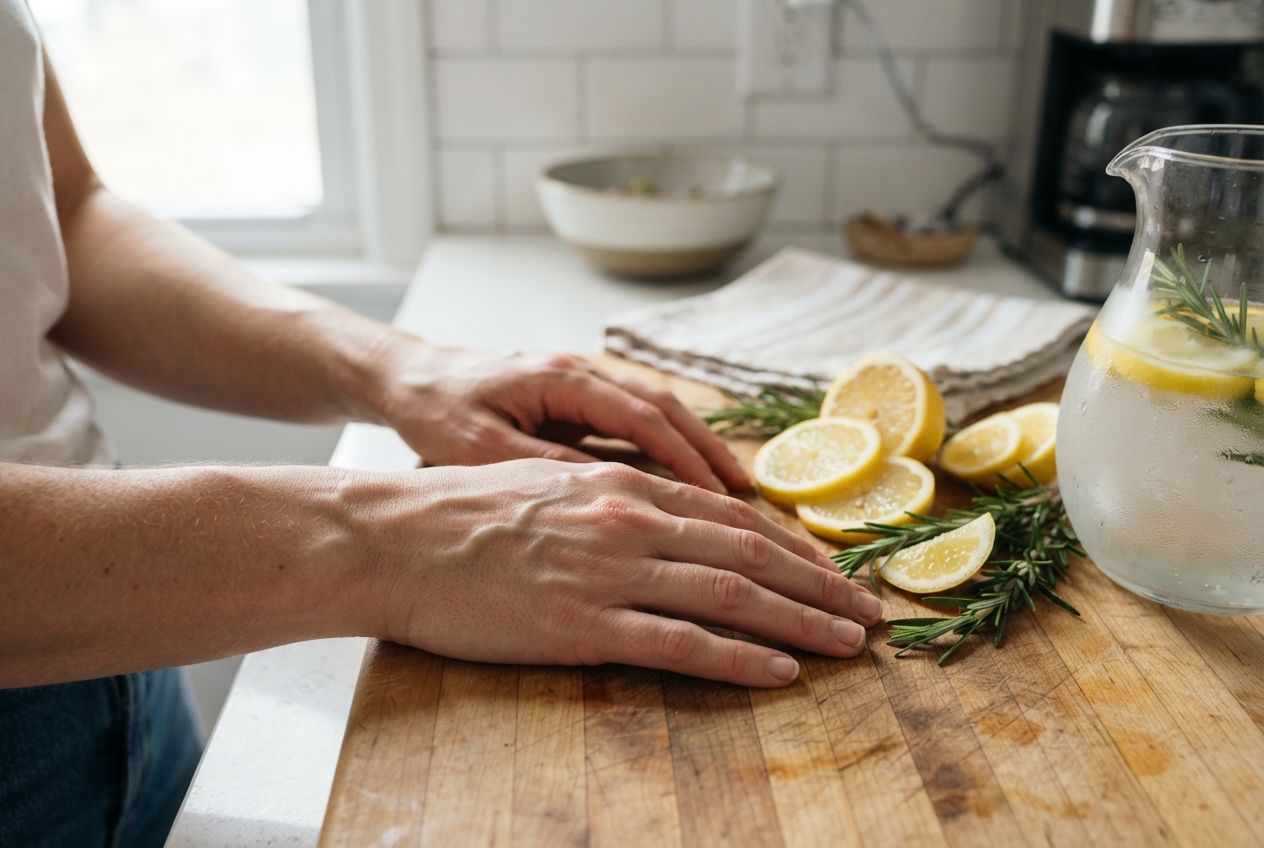
Warm kitchen tasks, physical movement, and temperature shifts naturally cause blood vessels in your hands to widen and show through.
Physical effort plays a similar role. If you carry heavy grocery sacks, pull weeds, or lift weights, your working muscles swell with blood and press the surrounding veins upward against your skin. Combine that with a low percentage of body fat, and veins naturally have less padding to hide behind. It is why athletes and folks with naturally lean frames often display prominent vascular maps across their arms and legs.
Hydration and Blood Volume
Water balance affects your circulation far more than most people realize. When you are mildly dehydrated, your overall blood volume drops, but your body works harder to maintain blood pressure, causing surface veins to tighten and occasionally appear more defined or cord-like.
Conversely, drinking plenty of water infused with cucumber or fresh citrus supports healthy vascular elasticity. Well-hydrated tissue surrounds veins with balanced fluid levels, helping everything sit naturally beneath the skin.
The Skin Deep Truth: Collagen, Genetics, and Natural Aging
Sometimes the change is not about the veins at all, but rather the curtain hanging in front of them: your skin. As the years roll by, our bodies produce less collagen and elastin. Skin gradually thins and loses some of the subcutaneous fat layer that cushioned our hands and ankles in our twenties.
Because the skin barrier becomes more translucent, the deoxygenated blood running through your veins—which absorbs red light wavelengths and reflects blue back to our eyes—shines right through. If you inherited fair, porcelain skin from your parents, you have probably noticed prominent green or blue branches since childhood.
Sun exposure accelerates this process. Years of enjoying sunny garden beds without hats or mineral sunscreen breaks down dermal collagen faster, leaving the skin across the tops of your hands, forearms, and chest paper-thin. What you are seeing is simply the road map underneath a lighter top sheet.
Spider Veins, Varicose Veins, and Surface Veins: Spotting the Difference
When people notice visible veins, they often group every blue mark into the same worry category. Distinguishing between normal surface anatomy and structural vein conditions gives you clarity on how to care for them.
- Normal Superficial Veins: These are flat against the skin, smooth to the touch, and usually look like faint blue or pale green ribbons. They may swell slightly in hot weather or during a workout, but they do not bulge, twist, or throb.
- Spider Veins (Telangiectasias): These look like delicate webs or tiny tree branches sitting right at the skin surface. They are red, purple, or dark blue and rarely cause physical discomfort, though they are very common around the ankles, knees, and face.
- Varicose Veins: These are raised, swollen, twisted cords that protrude noticeably above the skin surface, most commonly on the calves and thighs. They occur when the microscopic one-way valves inside leg veins weaken, allowing blood to pool backward instead of pumping efficiently back up toward the heart.
While spider veins are mostly an aesthetic annoyance, varicose veins can cause a dull, heavy ache after standing at a kitchen island or walking on concrete floors all morning.
When Visible Veins Signal Something More: Warning Signs
In most everyday situations, seeing your veins is nothing more than a cosmetic observation. However, your vascular system is an active feedback loop, and your body knows how to sound the alarm when circulation runs into trouble.
You will want to reach out to a healthcare provider or vascular specialist if your prominent veins arrive alongside any of these symptoms:
- Asymmetric Swelling: One leg, ankle, or foot suddenly looks visibly larger or puffier than the other.
- Localized Heat and Redness: A vein feels hard, tender like a tight rope, and hot to the touch, which can point to superficial thrombophlebitis.
- Persistent Throbbing or Heavy Aching: Your legs feel exhausted, tight, or painful, particularly at the end of the day or after gentle walking.
- Skin Changes and Pigmentation: The skin around your lower shins or inner ankles turns rust-colored, thickens, flakes like eczema, or develops open sores that heal slowly.
- Cold or Numb Extremities: Persistent cold toes, white fingers, or tingling sensations that do not resolve with warmth.
A sudden, painful swelling in one leg accompanied by redness or unexplained shortness of breath requires immediate emergency care, as it can indicate a deep vein blood clot (DVT).
Simple Daily Rituals to Support Healthy Circulation
If your doctor has confirmed your veins are healthy and you simply want to keep your legs energized and avoid that heavy, late-afternoon sluggishness, small adjustments to your daily routine make an enormous difference.

Propping your legs up for fifteen minutes after a long day helps blood travel back to your heart and eases tired, heavy calves.
1. Put Gravity on Your Side
Your leg veins have a challenging job: they must pump blood upward against gravity all day long. Whenever you sit down to read or watch an evening show, raise your feet up on a stack of floor cushions or lean your legs up against the wall for fifteen minutes. Propping your feet above heart level encourages pooled blood to drain back through deep vessels, instantly relieving that tight, tired feeling.
2. Keep the Calf Pump Moving
Your calf muscles act as a secondary heart. Every time you take a step, those muscles contract and squeeze the deep veins of your lower leg, pushing blood upward through one-way check valves. If your work keeps you at a desk, stand up every forty-five minutes to do twenty heel raises. Better yet, step outside for a brisk ten-minute walk down the block.
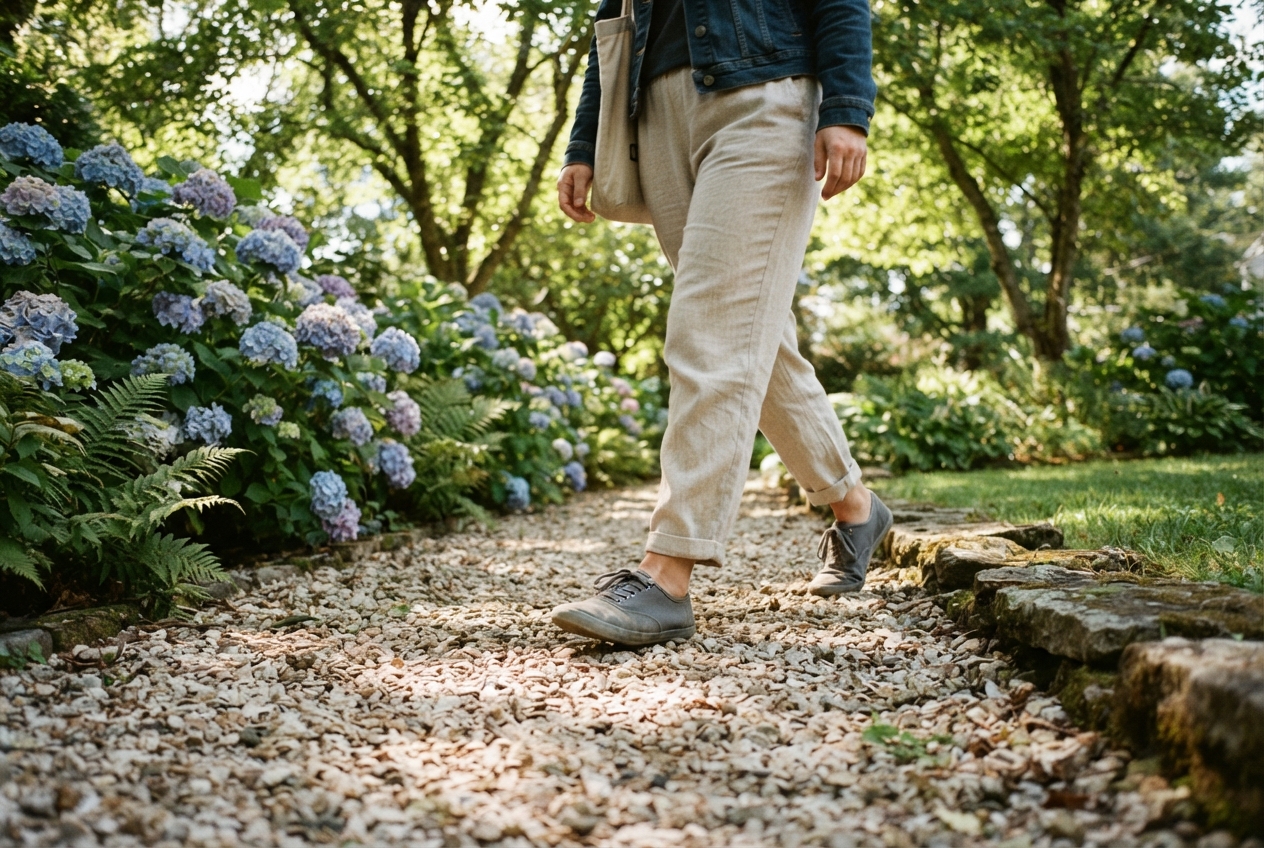
Daily walking activates your calf muscles, which squeeze your veins and keep blood circulating steadily upward.
3. Explore Modern Compression
Forget the scratchy, beige medical stockings of past decades. Today’s graduated compression socks come in cozy ribbed cotton, soft merino wool, and stylish colors that blend seamlessly with casual loungewear or sneakers. Wearing mild compression (15–20 mmHg) during long travel days, road trips, or afternoons on your feet helps prevent fluid from pooling in your ankles.
4. End Your Shower with a Cool Splash
Steamy baths and hot showers feel wonderful, but prolonged hot water widens surface veins and encourages sluggish circulation in your lower limbs. Before stepping out of the tub, turn the faucet to cool water and sweep the spray over your calves and feet for thirty seconds. The quick temperature contrast gently tightens blood vessels and leaves your legs feeling instantly refreshed.
Living Comfortably With Your Body’s Natural Roadmap
It is easy to scrutinize our bodies in bright bathroom mirrors, worrying over every small line or tint that was not there five years ago. Yet for the vast majority of us, visible veins are simply a sign of an active circulatory system doing its daily work beneath changing skin.
Support your body with plenty of water, steady movement, comfortable rest, and sun protection on your hands. When you understand what your blood vessels are responding to, those blue lines become far less mysterious—and far easier to take in stride.
Medical Disclaimer: This article is published solely for educational, informational, and lifestyle purposes and does not constitute medical advice, clinical diagnosis, or individualized treatment plans. Always consult a qualified physician, board-certified vascular specialist, or licensed healthcare provider with any questions you may have regarding a medical condition, sudden vascular changes, or persistent leg pain. Never disregard professional medical advice or delay seeking it because of something you have read online.