
You know that strange sensation when you hunt frantically across the kitchen counter for your reading glasses, only to find them resting squarely on the bridge of your nose? Or when you stare directly into the pantry searching for the jar of ground cinnamon, convinced an elusive thief walked off with it, before spotting it right at eye level? Our eyes collect an astonishing amount of visual data every second, yet our conscious mind registers only a small fraction of what passes across the retina.
When you want to train your brain to notice details, understanding why your gaze routinely glides right past obvious changes is the first step toward building genuine mental focus. It turns out that missing a small shift right before your eyes is not an optical defect. It is an intentional mental shortcut designed to protect you from sensory overload.
The Science of Change Blindness: Why the Brain Cuts Corners
Cognitive psychologists refer to this visual blind spot as change blindness. Throughout the day, your eyes execute rapid, jerky movements called saccades. While your eyeballs dart between your coffee mug, your morning planner, and the stove clock, your visual cortex temporarily pauses image processing for a few milliseconds at a time.
To keep you from experiencing life like a stuttering slideshow, your mind knits those fragments together by generating an internal prediction of what ought to be there. Instead of recording every fork prong, shadow shift, and salt shaker position, your brain settles on the overall impression of the room. It assumes everything remains steady unless a glaring movement triggers an immediate threat response.
When a small element changes without motion—such as a typo on a printed recipe card, a tiny water leak beneath the sink pipe, or a shifted line on a drawing—your internal prediction overrides the actual physical evidence. You see what you expect to see rather than what is genuinely resting on the table.

A quiet morning pause with a notebook and a warm mug creates the visual stillness needed to reset your daily focus.
Everyday Blind Spots: Where Overlooking Details Costs You
In puzzle graphics, missing an extra button on an illustration or an omitted eyebrow is harmless fun. In daily domestic life, however, visual autopilot carries measurable consequences that ripple across your home, wallet, and peace of mind.
Consider the grocery store receipt you shove into your canvas tote without glancing at the line items. Scanning that paper closely often reveals double scans on canned tomatoes or missed produce discounts that quietly drain your weekly budget. Over the course of a year, those unchecked lines add up to hundreds of wasted dollars.
In the kitchen, visual autopilot leads to baking mishaps and spoiled pantry goods. You glance at a measuring spoon and grab tablespoon instead of teaspoon, or you walk past a jar of baking powder three weeks past its prime without reading the printed date. Your eyes see the familiar blue canister, but your attention never engages with the specifics written across the label.
- Home maintenance issues: A faint discoloration around a ceiling register or an accumulation of lint behind the dryer often sits in plain view for months before registered by the homeowner.
- Written commitments: Glancing over dates on calendar invites leads to arriving on Wednesday for an appointment clearly booked for Thursday morning.
- Pantry organization: Double-buying staples because an existing bag slipped behind a cereal box creates pantry clutter and unnecessary spending.

Scanning your kitchen counters with a deliberate eye helps catch missing ingredients and small messes before they compound.
Practical Daily Habits to Train Your Brain to Notice Details
Breaking free from mental autopilot does not require endless cognitive drills or expensive apps. You can rebuild your observational sharpness using simple, structured habits woven directly into your everyday home routine.
The secret lies in replacing passive visual sweeping with active inspection techniques. When you deliberately alter how your eyes traverse a space, your brain stops relying on its pre-baked predictions and begins taking fresh inventory of what is actually present.
1. The Quadrant Sweep
When reviewing a countertop, a desk, or an important document, avoid letting your eyes wander in fluid, lazy paths. Instead, visually divide the area into four quadrants like a grid. Examine the top-left box in isolation, looking only at objects located within that boundary before permitting your focus to cross into the top-right zone.
This grid system forces your visual system to reset its expectations at every boundary line. Professional safety inspectors and proofreaders rely on this exact method because it prevents the mind from treating the entire field as a single settled scene.
2. The Physical Touch Technique
Vision becomes dramatically sharper when paired with physical motion. If you are verifying an ingredient checklist, checking a travel itinerary, or scanning an invoice, run the eraser end of a pencil or your index finger along each individual word and line.
Physical contact slows your reading cadence down to the speed of your hand, preventing your eye from jumping ahead to fill in missing gaps. This simple pause gives subtle errors room to rise to the surface before they slip by.
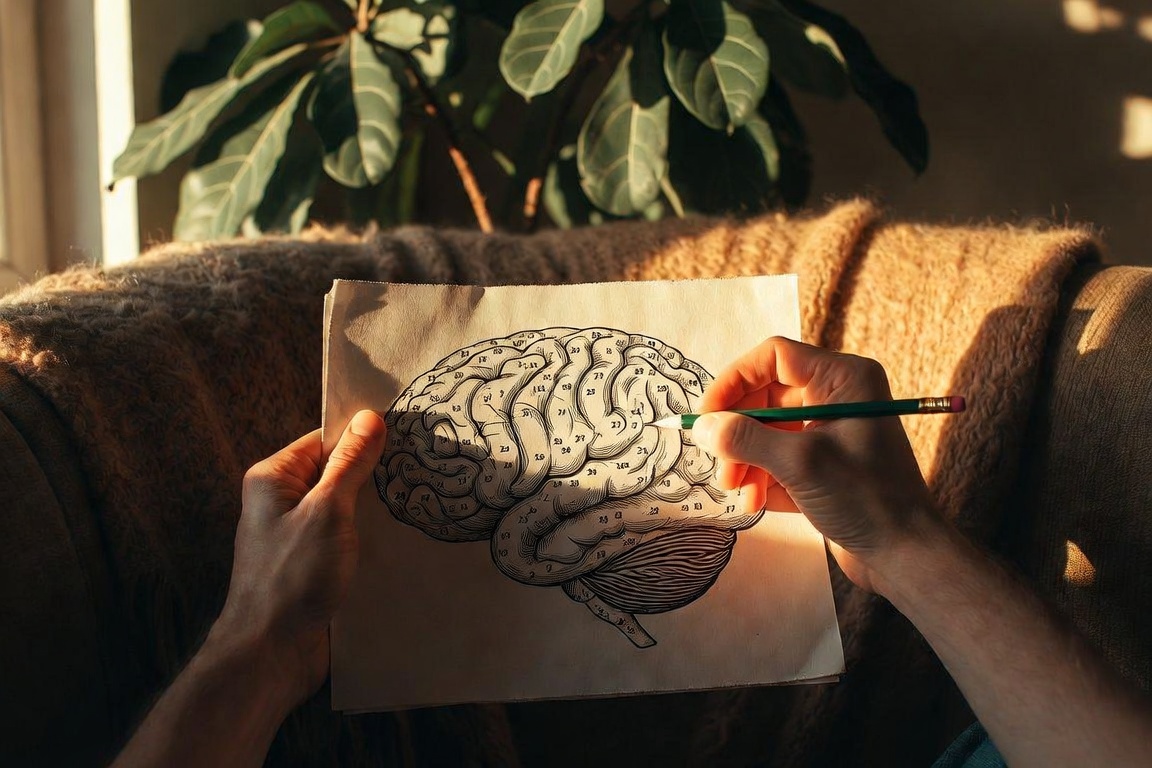
Taking three minutes to work through an illustrated brain teaser exercises your visual scanning reflexes away from screens.
Using Visual Puzzles to Build Real Mental Friction
Spot-the-difference challenges, newspaper crosswords, and hidden-object illustrations are far more than idle diversions while your water boils on the stove. They act as targeted resistance training for your visual cortex, teaching your attention to resist quick assumptions.
When presented with two side-by-side images, your subconscious immediately tries to lump both figures into a single broad concept, such as “two parents holding toddlers.” The brain wants to declare the images identical so it can save cognitive energy and move on to the next task.
Taking three undisturbed minutes to search for a hidden anomaly creates productive mental friction. It forces you to ask: What shape is that collar? Where does that line end? Is that silhouette complete?
By refusing to accept the initial summary your mind hands you, you strengthen your capacity for deliberate focus. That disciplined skepticism translates directly into your workday when auditing spreadsheets, proofreading messages, or assembling furniture projects without missing a step.
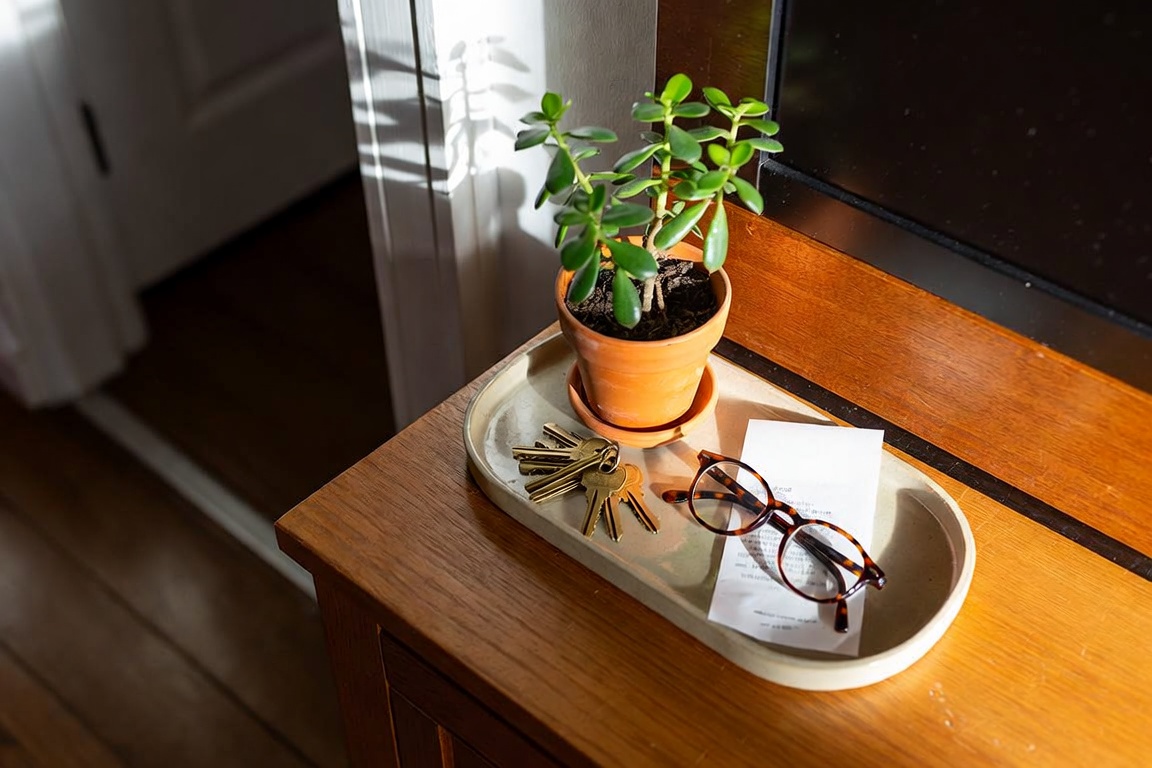
Giving everyday items dedicated landing zones trains your eyes to spot when something is missing or out of order.
The Two-Minute “Fresh Eyes” Reset
Here is an easy practice to try right now in your living room or kitchen. Step outside the doorway, close your eyes for five seconds, and take one slow, grounding breath. Imagine you are a guest stepping through that door for the very first time, completely unburdened by memories of where things belong.
Open your eyes and note the very first three details that grab your attention. You might instantly register a crooked picture frame, a dusty plant leaf that needs wiping, or an unread stack of mail begging for sorting. Shifting your vantage point strips away the blanket of familiarity that usually blinds you to your immediate surroundings.
Living with Awake Eyes in a Distracted World
Modern living inundates our senses with constant notifications, rapid-cut video feeds, and overflowing to-do lists. In self-defense, our brains learn to tune out the physical world around us, turning our living spaces into a hazy blur while our minds race ten steps ahead.
When you intentionally train your brain to notice details, you do more than avoid minor blunders on grocery bills or puzzle challenges. You cultivate a deeper sense of presence in your domestic space. You notice the very first green bud pushing through the soil of your rosemary pot, the delicate grain on a restored wood table, and the quiet expressions of gratitude across the evening dinner table.
Slow down your gaze, pause before moving from room to room, and give your surroundings an extra two seconds of genuine curiosity. The world is packed with quiet clues and small wonders, waiting patiently for anyone willing to stop and actually look.