
Few dilemmas expose the fragile threads of modern marriage quite like the viral story that quietly lit parenting forums on fire this week. It reads like a modern domestic suspense novel: a high-stakes corporate presentation, a sick child with a burning fever, an absent biological mother, and a husband away on business. At the center stands a stepmother clinging fiercely to the mantra of staying in her own lane. When clear blended family boundaries collide with raw human emergencies, the fallout leaves everyone scorched.
The anonymous author laid her soul bare for internet scrutiny. Remarried for just two years, she lived with an alternating custody routine that worked smoothly on surface level. She cooked meals, assisted with school projects, and shared laughs with her husband’s young daughter. Yet, she maintained an ironclad emotional fence. She had declared from the very start that she was not the child’s mother and would never attempt to fill those shoes.
Then arrived the fateful Tuesday morning. With a crucial career project waiting on her desk and her husband out of town, she heard a distress call from the girl’s bedroom. A sudden, burning fever had taken hold. Two frantic calls to the biological mother went straight to voicemail. Several urgent text messages went unread. Standing at the threshold, the stepmother made a snap choice that would instantly dismantle her quiet domestic life.
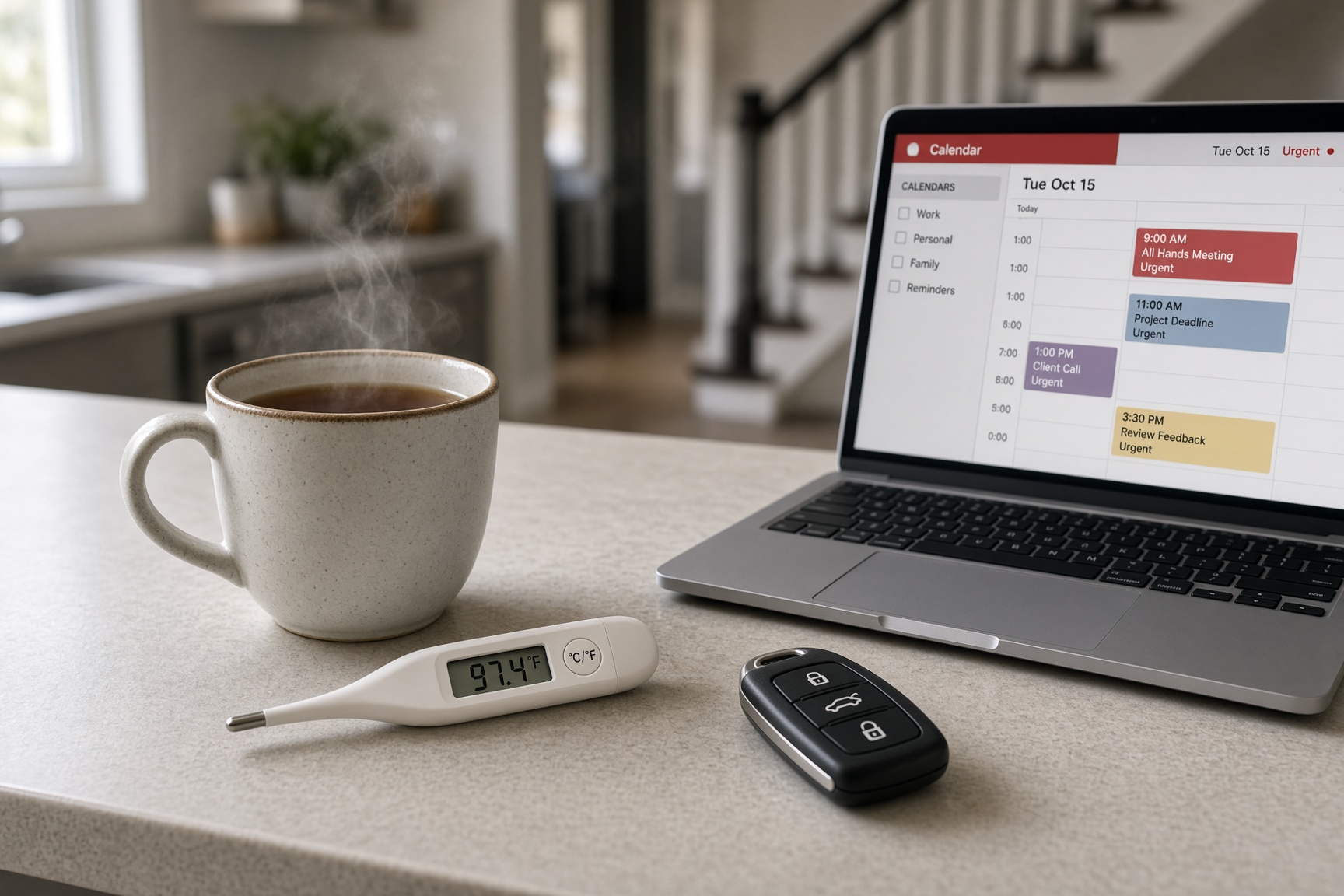
A quiet kitchen island, an urgent work deadline, and a digital thermometer: the exact moment a weekday routine turns into an ethical crossroads.
The Line Between Emotional Space and Duty of Care
Her defense sounded remarkably clinical. She gave the child fever reducer, set a tall glass of ice water on the nightstand, adjusted the bedroom fan, and asked an adjacent neighbor to check in periodically. Then, she smoothed down her blazer, grabbed her keys, and drove straight to her office. Her rationale was unyielding: her career was hard-won, her professional reputation hung in the balance, and mothering this child was explicitly not her responsibility.
Here lies the core tension that has readers fiercely divided. There is a vast difference between preserving emotional boundaries and fulfilling a baseline duty of care. No reasonable partner expects a stepmother to displace a biological parent or shoulder unilateral legal decisions. However, an ill minor under your roof is not a roommate who simply forgot their house key. When an adult is the sole responsible party present in a house during an emergency, basic human stewardship supersedes ideological lane-keeping.
Leaving a burning fever in the hands of an intermittent neighborly check-in strikes most seasoned parents as chilling. Illness in children can escalate within minutes, turning mild lethargy into sudden dehydration or seizures. Relying on an uncontracted neighbor while racing off to satisfy a corporate checklist prioritizes professional face over basic safety. It highlights an uncomfortable reality: self-protection can easily slide into quiet neglect.

When family boundaries meet an empty hallway, the silence can feel much louder than any heated argument.
The Bedroom Ambush: When Co-Parents Form a Sudden Wall
If the morning decision sparked debate, the evening homecoming delivered pure emotional whiplash. Returning from work, the stepmother stepped into an eerily quiet home. She walked upstairs into the child’s room only to witness a scene that felt like an emotional ambush. Her husband had returned early from his trip, sitting on the mattress beside his former wife. Their hands were joined together over the blankets, their gazes united in shared fury.
The confrontation was swift and merciless. Her husband labeled her an abandoner, insisting that anyone with genuine affection would have dropped everything without a second thought. When she pointed out that the biological mother ignored multiple calls and messages throughout the morning, her husband brushed it aside. The mother had arrived the moment she saw the notifications; the stepmother, in his eyes, had intentionally walked away.
That visual—an ex-spouse and a husband holding hands in judgment—cuts straight to the bone of every stepparent’s deepest insecurity. Blended families require extraordinary trust to survive. Watching your partner instantly form a cohesive emotional bloc with their former spouse leaves you stranded on the outside looking in. It feels like an emotional betrayal of the highest order, transforming the marital bedroom into an interrogation chamber.
“When an emergency hits a blended home, the sudden appearance of a united biological front can make the newest spouse feel completely invisible.”
Unpacking the Husband’s Sudden Deflection
While the stepmother’s departure was fundamentally flawed, her husband’s reaction reeked of panic-driven deflection. He was miles away on a trip when his daughter fell ill. Unable to protect her himself, he returned home carrying a massive load of parental guilt. Instead of addressing the systemic failure of their family communication, he channeled every ounce of his anxiety into attacking his wife.
Aligning with his ex-wife provided instant emotional shelter. It allowed him to project the entire crisis onto a convenient villain rather than confronting his own failure to establish reliable emergency childcare backups. The hand-holding was less about romantic rekindling and more about two biological parents closing ranks against an outsider who had failed their unspoken expectations.
He expected his wife to operate with maternal instinct on demand, despite having established ground rules that kept her at arm’s length. You cannot ask someone to stay strictly on the periphery of parenting and then demand they morph into a self-sacrificing caregiver the second convenient.

Sitting with the fallout of an impossible morning and wondering where practical duty ends and emotional loyalty begins.
Revisiting Blended Family Boundaries Before the Next Crisis Hits
Healthy blended family boundaries are not constructed during an unfolding medical dilemma. They are hammered out over calm dinner conversations, backed by clear contingency systems that respect both partners’ professional obligations. When expectations remain unspoken, crises inevitably create resentment that lingers for years.
Many stepparents adopt a philosophy of total detachment as a defensive shield. After years of hearing horror stories about wicked stepmothers or intrusive in-laws, they retreat into emotional indifference. They think: If I do not care too deeply, I cannot be criticized. Yet life does not operate within tidy contractual borders. Caring for a feverish human being under your care requires kindness, not a legal adoption certificate.
To avoid similar catastrophes, homes must establish practical ground rules that separate emotional parenting from emergency stewardship. Here are four baseline practices every blended household needs to implement before the next school sick day arrives:
- The 60-Minute Biological Rule: If an urgent situation arises, both biological parents must have designated secondary contacts who can step in within one hour if work cannot be rescheduled.
- Documented Medical Consent: Every stepparent should have formal medical release forms and pediatrician contact numbers stored on their phone, eliminating uncertainty about legal permissions.
- Emergency Career Trade-Offs: Spouses must negotiate in advance how professional emergencies are balanced, determining when a stepparent can reasonably cover without risking their employment.
- No Third-Party Ambushing: Disagreements regarding household management must remain strictly between the married couple, keeping ex-spouses completely out of disciplinary critiques.
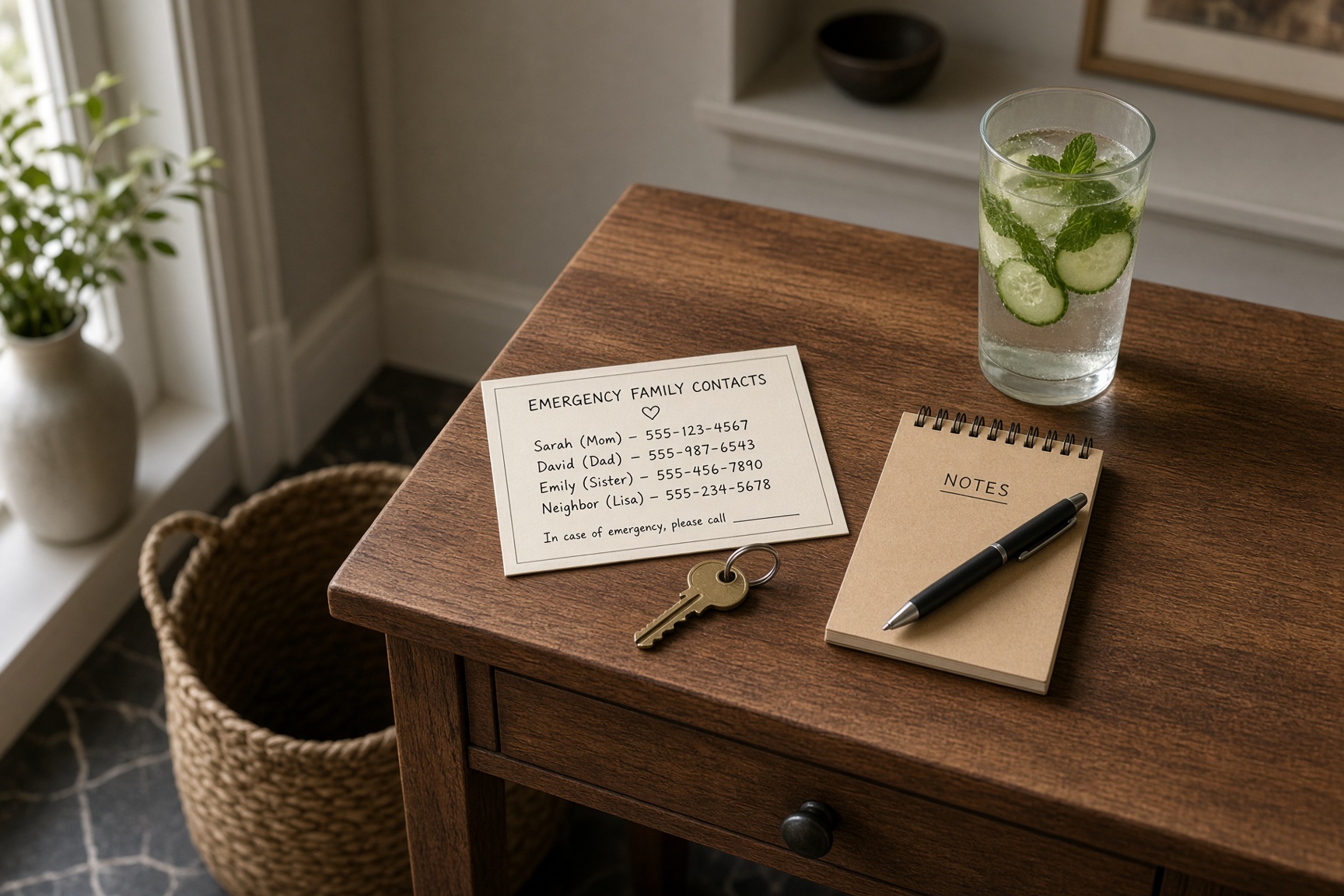
A written emergency protocol on the entryway table removes panic, guesswork, and second-guessing when plans fall apart.
The Lesson: Kindness Never Demands You Surrender Your Identity
What this viral narrative reveals is a profound lack of community within the modern home. The stepmother viewed her morning as a binary struggle: sacrifice her hard-earned career or abandon a sick child to an empty room. That false choice led directly to heartbreak. A brief call to her supervisor to explain a two-hour family delay, paired with insistence that the biological mother take over immediately, would have protected both her job and her integrity.
Stepparenting remains one of the most thankless roles in modern family life. You walk a tightrope across high expectations, ambiguous boundaries, and lingering past attachments. Yet basic empathy should never become collateral damage in your quest for self-preservation. Offering cold compress towels, making simple chicken broth, and holding space for an uncomfortable morning does not make you a replacement mother; it simply makes you a decent human being.
The aftermath of that Tuesday morning will likely leave permanent scars across this couple’s marriage. Trust shattered in a bedroom cannot be glued back together by holding onto stubborn rules. Moving forward requires both partners to acknowledge where they broke faith, honoring realistic blended family boundaries while keeping compassion firmly at the wheel.